My Role
End-to-end
UX Researcher and
UX/UI Designer
Timeline
7 weeks
Tools
Figma
FigJam
Adobe Illustrator
Adobe Photoshop

PROJECT OVERVIEW
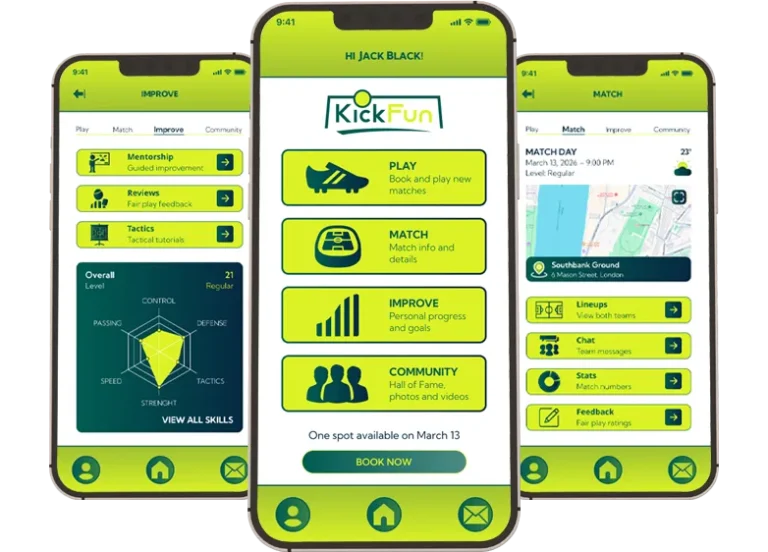
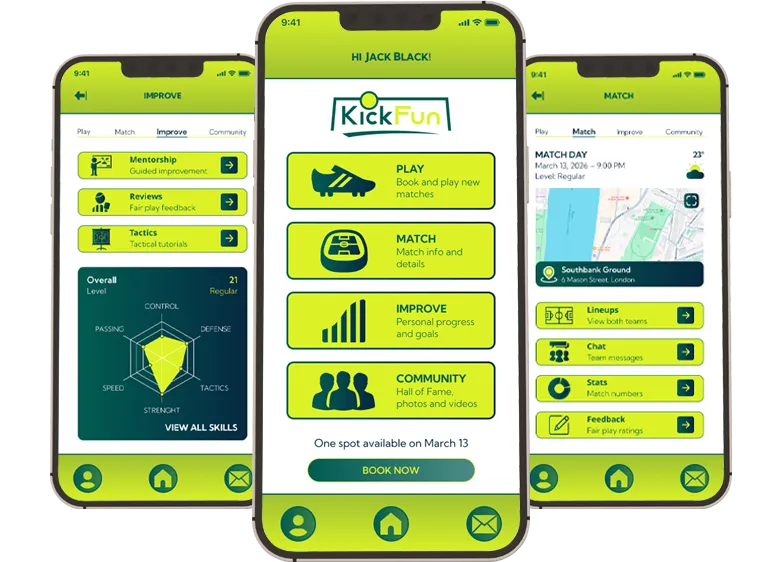
Kick Fun is a mobile-first web app designed to organize and manage a 7-a-side amateur football community.
The project focuses on making participation more reliable by structuring access to matches, integrating booking and payment, and supporting long-term engagement.

EMPHATIZE

DEFINE

IDEATE

PROTOTYPE

TEST
My Role
End-to-end
UX Researcher and
UX/UI Designer
Timeline
7 weeks
Tools
Figma
FigJam
Adobe Illustrator
Adobe Photoshop
PROJECT OVERVIEW
Kick Fun is a mobile-first web app designed to organize and manage a 7-a-side amateur football community.
The project focuses on making participation more reliable by structuring access to matches, integrating booking and payment, and supporting long-term engagement.
My Role
End-to-end
UX Researcher and
UX/UI Designer
Timeline
7 weeks
Tools
Figma
FigJam
Adobe Illustrator
Adobe Photoshop
PROJECT OVERVIEW
Kick Fun is a mobile-first web app designed to organize and manage a 7-a-side amateur football community.
The project focuses on making participation more reliable by structuring access to matches, integrating booking and payment, and supporting long-term engagement.
1. PROJECT INTRODUCTION
Context
A community of ~100 players meets weekly to play 7-a-side football.
What started as an informal activity has evolved into a recurring, structured experience with coordination needs around access, participation, and group management.
An internal website supports match organization, but most coordination still depends on a single organizer.
1. PROJECT INTRODUCTION
Context
A community of ~100 players meets weekly to play 7-a-side football.
What started as an informal activity has evolved into a recurring, structured experience with coordination needs around access, participation, and group management.
An internal website supports match organization, but most coordination still depends on a single organizer.
As the group grows, the system no longer scales with the complexity of participation.
Read More
Problem
The current system does not support fair and reliable participation over time.
- Access to matches depends on speed rather than availability
- Booking, payment, and communication are fragmented
- Rules and expectations rely on manual enforcement
As a result, participation becomes unpredictable, inconsistent, and organizer-dependent.
Goal
Design a system that enables fair, predictable, and continuous participation.
Focus on:
- Flexible and reliable match access
- A unified booking + payment flow
- Explicit and system-supported rules
- Sustained engagement beyond single matches
Design Strategy
Shift from a fragmented, organizer-driven process to a system that structures participation end-to-end.
Three decisions define the project from the start:
- Access should not depend on speed
- Booking, payment, and rules should be part of one continuous flow
- Participation should be supported beyond the single match
These decisions guide the entire solution, from structure to interface design.
Solution
A mobile-first web app that connects onboarding, match organization, and longterm engagement into a single system.
Core areas:
- Player setup → role and skill definition
- Match flow → booking, payment, confirmation
- Growth layer → mentorship, goals, progress tracking
Read More
Problem
The current system does not support fair and reliable participation over time.
- Access to matches depends on speed rather than availability
- Booking, payment, and communication are fragmented
- Rules and expectations rely on manual enforcement
As a result, participation becomes unpredictable, inconsistent, and organizer-dependent.
Goal
Design a system that enables fair, predictable, and continuous participation.
Focus on:
- Flexible and reliable match access
- A unified booking + payment flow
- Explicit and system-supported rules
- Sustained engagement beyond single matches
Design Strategy
Shift from a fragmented, organizer-driven process to a system that structures participation end-to-end.
Three decisions define the project from the start:
- Access should not depend on speed
- Booking, payment, and rules should be part of one continuous flow
- Participation should be supported beyond the single match
These decisions guide the entire solution, from structure to interface design.
Solution
A mobile-first web app that connects onboarding, match organization, and longterm engagement into a single system.
Core areas:
- Player setup → role and skill definition
- Match flow → booking, payment, confirmation
- Growth layer → mentorship, goals, progress tracking
Results
The redesigned experience improves clarity and reduces friction across the main flows. Booking, payment, and confirmation are combined into a single sequence, reducing reliance on external coordination. Payment becomes predictable, and rules are made explicit before participation.
Some complexity remains in advanced features, but was refined during iteration without changing the overall structure.
2. RESEARCH
2.1 Research Introduction
2. RESEARCH
2.1 Research Introduction
Context
Joining a match is not only a booking action.
It involves access, coordination, group dynamics, and continuity over time.
The initial analysis showed that the breakdown does not depend on a single feature but on how the system supports participation as a whole.
Research Problem
Some players join regularly, while others struggle to access matches or stay involved.
The problem is not only access, but the lack of a system that supports participation consistently over time.
Despite having an existing system, participation remains inconsistent.
Despite having an existing system, participation remains inconsistent.
Objectives
The research focused on understanding:
- How players access matches
- Where friction occurs across booking, payment, and communication
- How group dynamics influence participation
- Which needs are not currently supported
Methods
Two complementary approaches were used:
- Competitor analysis to identify patterns and gaps
- 4 user interviews + organizer interview to understand real behaviors and constraints
2.2 Competitor Analysis
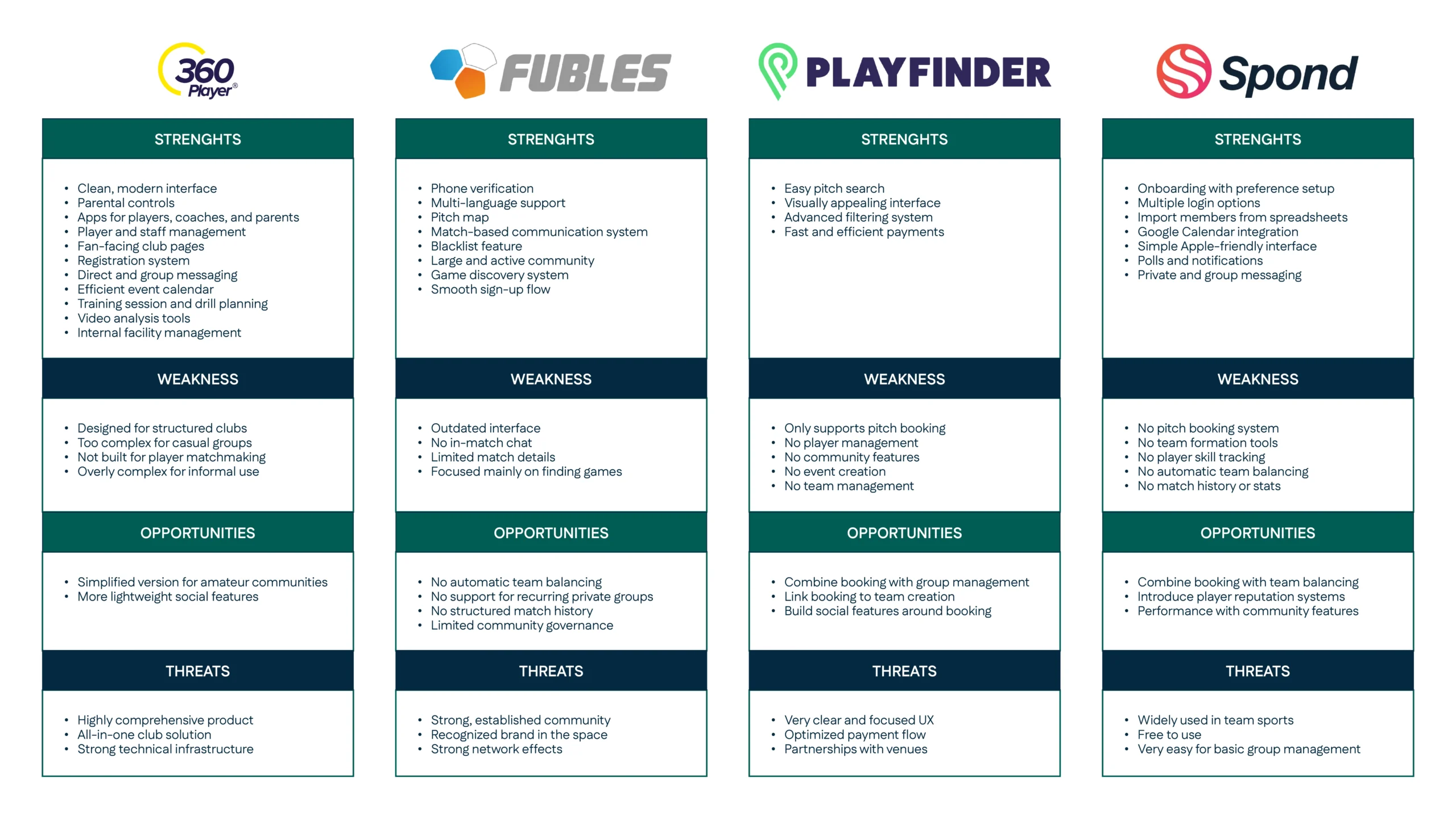
Existing platforms address parts of the experience, but not the full journey.
- Booking platforms provide efficient access, but do not support long-term participation
- Group tools enable coordination, but lack mechanisms for fair and consistent access
- Payment is often external and fragmented
- More advanced systems are too complex for informal groups
View Competitor Analysis
2.2 Competitor Analysis
Existing platforms address parts of the experience, but not the full journey.
- Booking platforms provide efficient access, but do not support long-term participation
- Group tools enable coordination, but lack mechanisms for fair and consistent access
- Payment is often external and fragmented
- More advanced systems are too complex for informal groups
View Competitor Analysis
Insight: no solution supports participation as a continuous and structured experience.
Insight: no solution supports participation as a continuous and structured experience.
2.3 User Interviews
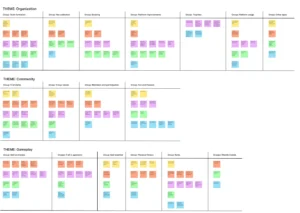
Interviews helped ground the analysis in real behaviors and experiences.
Recurring evidence:
“Fast response is required” → access depends on speed
“Cash payments make collection inefficient” → payment friction
“Last-minute dropouts disrupt team balance” → instability
“Rules help keep play safe, but are not always followed” → weak enforcement
“Overall participation is declining” → lack of continuity
View Affinity Map
2.3 User Interviews
Interviews helped ground the analysis in real behaviors and experiences.
Recurring evidence:
“Fast response is required” → access depends on speed
“Cash payments make collection inefficient” → payment friction
“Last-minute dropouts disrupt team balance” → instability
“Rules help keep play safe, but are not always followed” → weak enforcement
“Overall participation is declining” → lack of continuity
View Affinity Map
2.4 Research Synthesis
The synthesis revealed a consistent pattern: the experience breaks down over time due to lack of system support.
Read More
Core insights:
- Match access depends on timing and availability rather than system support, making participation uneven across users
- Participation is difficult to maintain over time due to cancellations, weather, and inconsistent attendance
- Payment is a recurring operational friction, especially when handled manually
- Rules exist, but they are not reinforced consistently enough to support fair and safe play
- Team balance depends on skill distribution and player reliability, but the current system does not support either clearly enough
- The experience does not support continuity beyond the match, despite users expressing interest in improvement, connection, and progression
Some complexity remains in advanced features, but was refined during iteration without changing the overall structure.
Prioritization
The focus was placed on the issues that most directly affect participation:
- Access
- Continuity
- Payment
- Rules
- Engagement
Other aspects, such as team balance and social dynamics, remained important but were treated as secondary at this stage. Team balance was partially addressed through role and skill
inputs, while broader social dynamics were considered less directly controllable through system design alone.
2.4 Research Synthesis
The synthesis revealed a consistent pattern: the experience breaks down over time due to lack of system support.
Read More
Core insights:
- Match access depends on timing and availability rather than system support, making participation uneven across users
- Participation is difficult to maintain over time due to cancellations, weather, and inconsistent attendance
- Payment is a recurring operational friction, especially when handled manually
- Rules exist, but they are not reinforced consistently enough to support fair and safe play
- Team balance depends on skill distribution and player reliability, but the current system does not support either clearly enough
- The experience does not support continuity beyond the match, despite users expressing interest in improvement, connection, and progression
Some complexity remains in advanced features, but was refined during iteration without changing the overall structure.
Prioritization
The focus was placed on the issues that most directly affect participation:
- Access
- Continuity
- Payment
- Rules
- Engagement
Other aspects, such as team balance and social dynamics, remained important but were treated as secondary at this stage. Team balance was partially addressed through role and skill
inputs, while broader social dynamics were considered less directly controllable through system design alone.
3. DEFINE
3.1 Framing the Problem
Research highlighted multiple issues, but the core problem is not fragmented.
Participation breaks down because the system does not support it consistently over time. Access, payment, rules, team balance, and continuity are not independent issues, but connected parts of the same experience.
This reframes the project from improving isolated features to making a more fundamental decision: participation should be structured by the system rather than managed through speed, manual coordination, or user effort alone.
3. DEFINE
3.1 Framing the Problem
Research highlighted multiple issues, but the core problem is not fragmented.
Participation breaks down because the system does not support it consistently over time. Access, payment, rules, team balance, and continuity are not independent issues, but connected parts of the same experience.
This reframes the project from improving isolated features to making a more fundamental decision: participation should be structured by the system rather than managed through speed, manual coordination, or user effort alone.
3.2 Point of View
- A player needs flexible access to matches because time-based booking excludes those who cannot respond immediately
- A player needs to participate consistently because external factors (weather, schedule) disrupt continuity
- A player needs a regulated environment because excessive competitiveness reduces enjoyment and safety
- A player needs an integrated payment system because fragmented methods create confusion and delays
- A player needs ways to improve and stay engaged because the experience currently ends at the match
3.3 How Might We
The Point of View statements are translated into design challenges that guide solution exploration.
Instead of addressing isolated issues, each question focuses on improving a key part of the participation flow.
- How might we enable match access without relying on speed?
- How might we support consistent participation despite changing availability?
- How might we reinforce rules and fair play through the system?
- How might we integrate payment into the booking flow?
- How might we extend the experience beyond the match?
3.2 Point of View
- A player needs flexible access to matches because time-based booking excludes those who cannot respond immediately
- A player needs to participate consistently because external factors (weather, schedule) disrupt continuity
- A player needs a regulated environment because excessive competitiveness reduces enjoyment and safety
- A player needs an integrated payment system because fragmented methods create confusion and delays
- A player needs ways to improve and stay engaged because the experience currently ends at the match
3.3 How Might We
The Point of View statements are translated into design challenges that guide solution exploration.
Instead of addressing isolated issues, each question focuses on improving a key part of the participation flow.
- How might we enable match access without relying on speed?
- How might we support consistent participation despite changing availability?
- How might we reinforce rules and fair play through the system?
- How might we integrate payment into the booking flow?
- How might we extend the experience beyond the match?
3.4 Summary
The Define phase turns research into a clear design position: participation should be reliable, explicit, and structured across the whole experience. This creates a focused direction for the next phase, ensuring that ideation is not about adding features, but about deciding which mechanisms can make participation fairer, clearer, and more sustainable over time.
3.4 Summary
The Define phase turns research into a clear design position: participation should be reliable, explicit, and structured across the whole experience. This creates a focused direction for the next phase, ensuring that ideation is not about adding features, but about deciding which mechanisms can make participation fairer, clearer, and more sustainable over time.
4. USER PERSONA
4.1 Why Personas
Personas are used to translate research insights into concrete user perspectives and guide design decisions.
Rather than representing all users, they focus on two critical moments of the experience: entering the system and staying engaged over time.
This distinction reflects a key finding from the research: participation issues emerge both at entry and over time, but for different reasons.
4. USER PERSONA
4.1 Why Personas
Personas are used to translate research insights into concrete user perspectives and guide design decisions.
Rather than representing all users, they focus on two critical moments of the experience: entering the system and staying engaged over time.
This distinction reflects a key finding from the research: participation issues emerge both at entry and over time, but for different reasons.
4.2 Mark — Returning Player
Mark represents users who are already part of the group but struggle to maintain consistent participation. His needs highlight issues related to:
- Reliability of access
- Team balance and fairness
- Reduced dependency on manual coordination
These insights directly informed decisions around booking structure, system-supported rules, and continuity mechanisms.
4.3 Arthur — New Player
Arthur represents users approaching the group for the first time. His needs highlight issues related to:
- Clarity of the system
- Ease of entry
- Perceived safety and inclusivity
These insights informed decisions around onboarding, rule visibility, and reducing friction in early interactions.
4.2 Mark — Returning Player
Mark represents users who are already part of the group but struggle to maintain consistent participation. His needs highlight issues related to:
- Reliability of access
- Team balance and fairness
- Reduced dependency on manual coordination
These insights directly informed decisions around booking structure, system-supported rules, and continuity mechanisms.
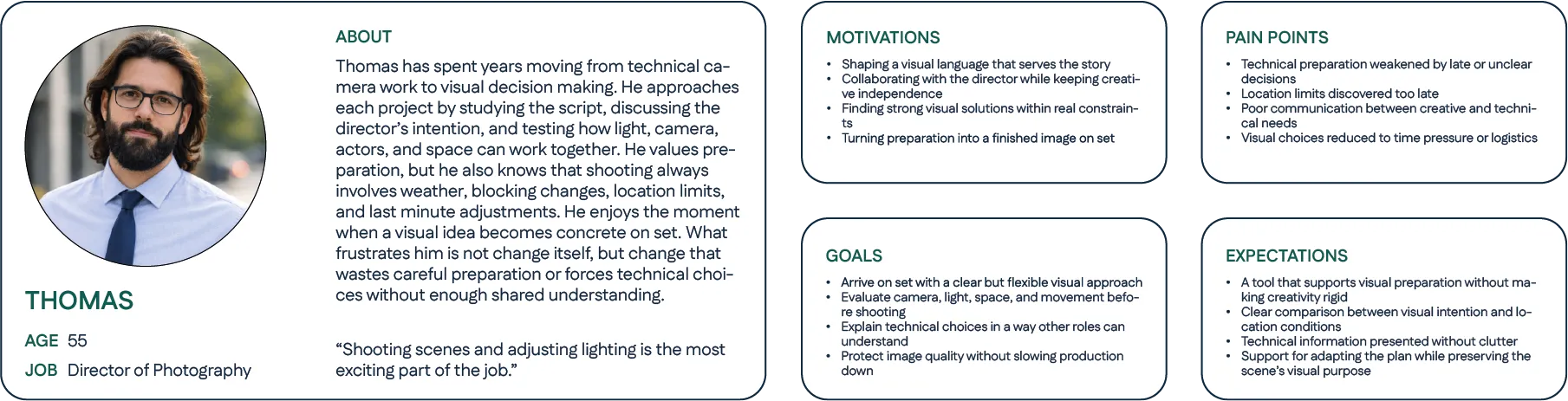
View User Persona Mark
4.3 Arthur — New Player
Arthur represents users approaching the group for the first time. His needs highlight issues related to:
- Clarity of the system
- Ease of entry
- Perceived safety and inclusivity
These insights informed decisions around onboarding, rule visibility, and reducing friction in early interactions.
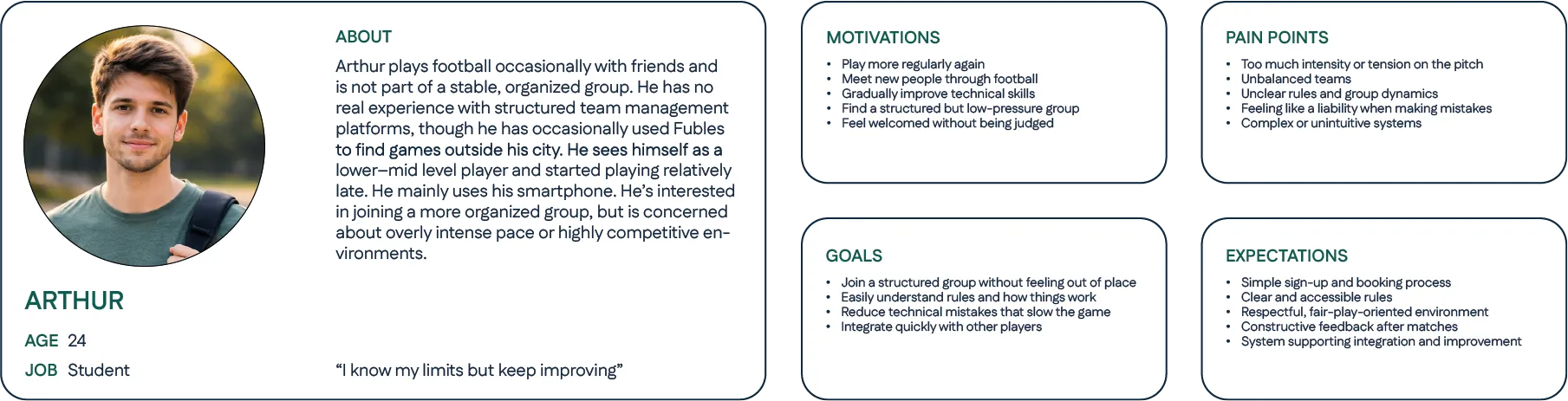
View User Persona Arthur
View User Persona Mark
View User Persona Arthur
4.4 Summary
Although Mark and Arthur represent different moments of the experience, their needs converge on the same system requirements:
- Accessible and predictable booking
- Clear and enforced rules
- Reduced reliance on external coordination
- Support for long-term engagement
Designing for both ensures that the system works across the full participation lifecycle, from first access to sustained involvement.
4.4 Summary
Although Mark and Arthur represent different moments of the experience, their needs converge on the same system requirements:
- Accessible and predictable booking
- Clear and enforced rules
- Reduced reliance on external coordination
- Support for long-term engagement
Designing for both ensures that the system works across the full participation lifecycle, from first access to sustained involvement.
5. IDEATION
5.1 Ideation Approach
Once the main design directions were defined through the Point of View statements and the How Might We questions, the goal was not simply to produce a large number of ideas, but to explore solutions that directly respond to user needs.
The process unfolded in two stages: a divergent phase, where a wide range of solutions was generated across the experience and a convergent phase, where ideas were evaluated and reduced based on their impact, coherence, and feasibility.
This shift from exploration to selection allowed moving from a broad set of possibilities to a more focused and structured design direction.
5. IDEATION
5.1 Ideation Approach
Once the main design directions were defined through the Point of View statements and the How Might We questions, the goal was not simply to produce a large number of ideas, but to explore solutions that directly respond to user needs.
The process unfolded in two stages: a divergent phase, where a wide range of solutions was generated across the experience and a convergent phase, where ideas were evaluated and reduced based on their impact, coherence, and feasibility.
This shift from exploration to selection allowed moving from a broad set of possibilities to a more focused and structured design direction.
5.2 Idea Exploration - Brainstorming
The How Might We questions were used as a structured starting point to explore possible solutions. Ideas were generated across all key areas of the experience, including booking, participation, rules, payment, and long-term engagement.
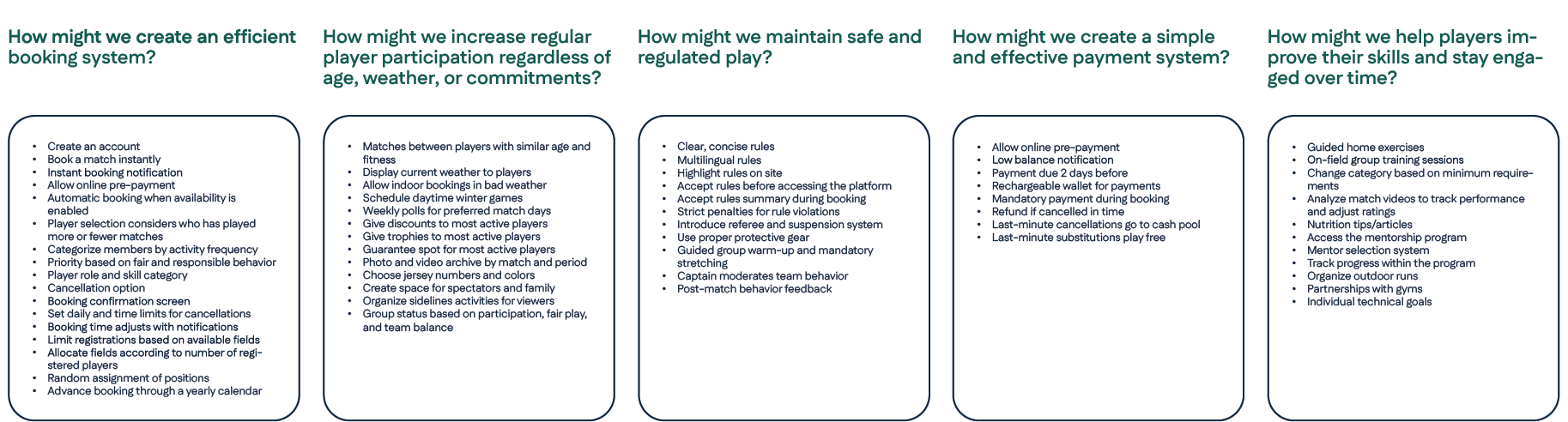
View Brainstorming Idea Generation
5.2 Idea Exploration - Brainstorming
The How Might We questions were used as a structured starting point to explore possible solutions. Ideas were generated across all key areas of the experience, including booking, participation, rules, payment, and long-term engagement.
View Brainstorming Idea Generation
Read More
The exploration revealed a set of recurring directions, but also an early pattern in decision-making.
- Reducing dependency on speed
automatic booking, yearly calendar, prioritization systems
- Shifting coordination from people to system logic
limits, role/skill categorization, structured allocation
- Integrating fragmented steps into one participation flow
booking + payment + confirmation
- Making rules part of the experience
rule acceptance, penalties, behavioral feedback
- Extending value beyond the single match
mentorship, goals, content, engagement features
At this stage, the key shift was from generating isolated ideas to identifying which mechanisms could realistically support participation over time.
5.3 Worst Possible Idea
To further test the solution space, the Worst Possible Idea technique was used to deliberately generate ineffective or extreme solutions.

View Worst Possible Idea
5.3 Worst Possible Idea
To further test the solution space, the Worst Possible Idea technique was used to deliberately generate ineffective or extreme solutions.
View Worst Possible Idea
Read More
Across all areas, the exercise highlighted consistent constraints:
- Manual coordination does not scale
solutions relying on organizer intervention were not viable
- Lack of structure increases friction
open or uncontrolled systems lead to instability
- Separated flows create confusion
booking, payment, and rules must be integrated
- Implicit behavior is unreliable
rules need to be explicit and system-supported
These principles were used as filters in the next phase, helping eliminate solutions that depend on user discipline or external coordination.
5.4 Idea Selection
5.4 Idea Selection
NOW HOW WOW Matrix
Ideas were evaluated using the Now–How–Wow matrix to balance impact, feasibility, and complexity.
Read More
Rather than balancing categories, the matrix was read to identify patterns:
- Now ideas
define the foundation of the system simple, high-impact, immediately implementable
- How ideas
extend the system with moderate complexity useful but not critical
- Wow ideas
high potential value often dependent on user behavior or more complex systems
Key decision
Many “Wow” ideas were intentionally not prioritized as core features, because they introduced higher complexity, depended on sustained user initiative, or added value without improving the stability of participation.
Ideas related to social engagement, rewards, and richer community interaction remained relevant but were treated as secondary compared to the more urgent need to make access, payment, and rules more reliable.
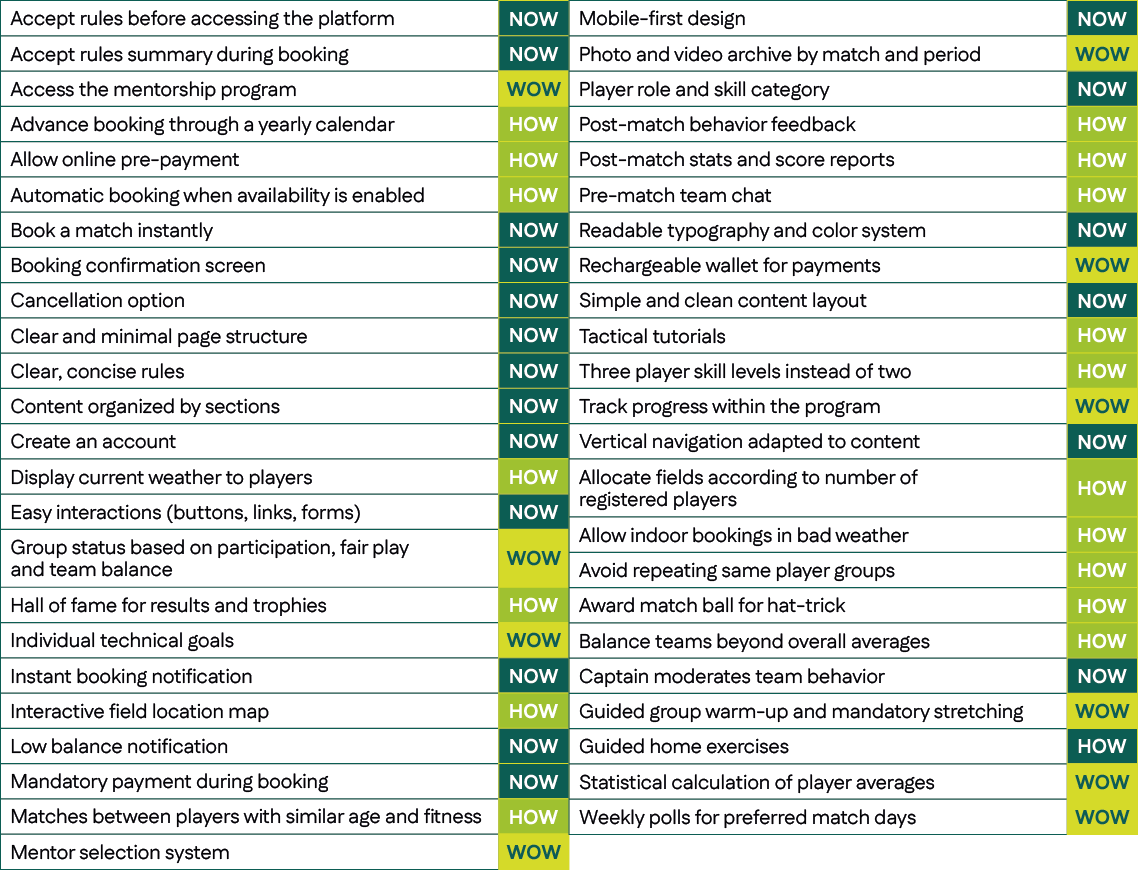
View Now How Wow Matrix
NOW HOW WOW Matrix
Ideas were evaluated using the Now–How–Wow matrix to balance impact, feasibility, and complexity.
Read More
Rather than balancing categories, the matrix was read to identify patterns:
- Now ideas
define the foundation of the system simple, high-impact, immediately implementable
- How ideas
extend the system with moderate complexity useful but not critical
- Wow ideas
high potential value often dependent on user behavior or more complex systems
Key decision
Many “Wow” ideas were intentionally not prioritized as core features, because they introduced higher complexity, depended on sustained user initiative, or added value without improving the stability of participation.
Ideas related to social engagement, rewards, and richer community interaction remained relevant but were treated as secondary compared to the more urgent need to make access, payment, and rules more reliable.
View Now How Wow Matrix
The focus remained on stabilizing participation before extending the experience.
The focus remained on stabilizing participation before extending the experience.
5.5 Final Selection
Six Thinking Hats
After prioritization through the Now–How–Wow matrix, the selected ideas were further evaluated using the Six Thinking Hats method.
The method was used to assess each idea from multiple perspectives:
- User value
- Feasibility and constraints
- Risks and potential downsides
- Impact on the overall system
This step was not used to generate new ideas, but to make decisions explicit, clarifying which ideas should define the system and which ones should remain secondary.
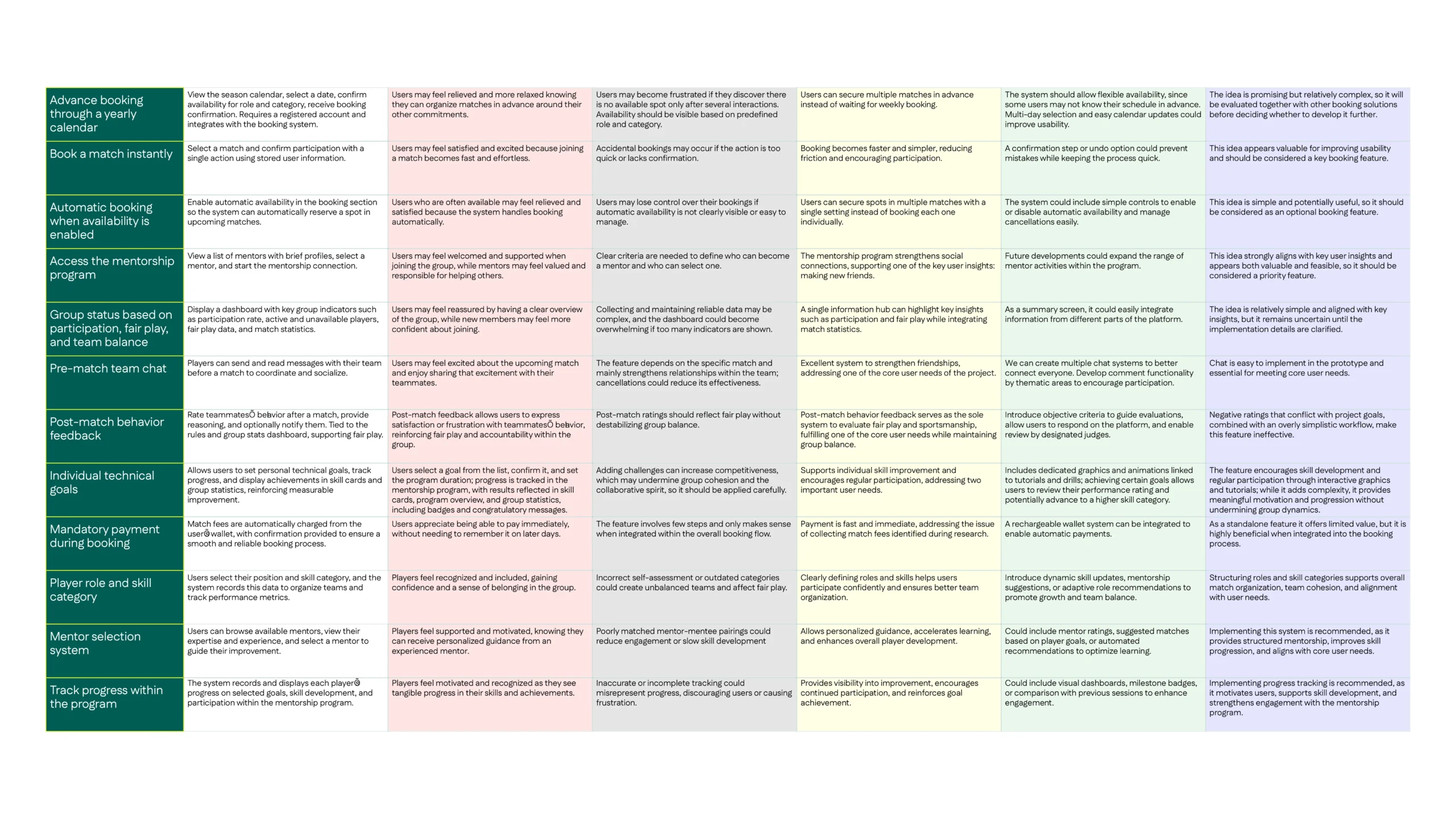
View Six Hats Method
5.5 Final Selection
Six Thinking Hats
After prioritization through the Now–How–Wow matrix, the selected ideas were further evaluated using the Six Thinking Hats method.
The method was used to assess each idea from multiple perspectives:
- User value
- Feasibility and constraints
- Risks and potential downsides
- Impact on the overall system
This step was not used to generate new ideas, but to make decisions explicit, clarifying which ideas should define the system and which ones should remain secondary.
View Six Hats Method
Read More
What emerged
Across the evaluation, consistent patterns became visible:
- Ideas connected to booking and participation reliability created the strongest system impact
- Solutions that reduced manual handling were more robust and scalable
- Ideas depending on moderation, subjective enforcement, or sustained initiative were more fragile
- Simpler mechanisms produced more reliable outcomes than layered or highly social features
This made the selection criteria more explicit: ideas were not advanced because they were interesting but because they improved participation in a reliable and repeatable way.
Outcome of the evaluation
The Six Thinking Hats analysis led to a clear distinction between three types of outcomes:
- Core ideas
Ideas that directly shape how the system works and define the main user flows
- Supporting ideas
Ideas that extend the experience but are not essential to the system’s core functionality
- Design principles
Ideas that do not translate into specific features, but guide the structure, clarity and usability of the interface.
This classification is the result of a consistent evaluation applied across all selected ideas. It reflects a clear trade-off: priority was given to ideas that improve reliability, reduce friction, and scale without depending too heavily on organizer intervention or unpredictable user behavior.
Read More
What emerged
Across the evaluation, consistent patterns became visible:
- Ideas connected to booking and participation reliability created the strongest system impact
- Solutions that reduced manual handling were more robust and scalable
- Ideas depending on moderation, subjective enforcement, or sustained initiative were more fragile
- Simpler mechanisms produced more reliable outcomes than layered or highly social features
This made the selection criteria more explicit: ideas were not advanced because they were interesting but because they improved participation in a reliable and repeatable way.
Outcome of the evaluation
The Six Thinking Hats analysis led to a clear distinction between three types of outcomes:
- Core ideas
Ideas that directly shape how the system works and define the main user flows
- Supporting ideas
Ideas that extend the experience but are not essential to the system’s core functionality
- Design principles
Ideas that do not translate into specific features, but guide the structure, clarity and usability of the interface.
This classification is the result of a consistent evaluation applied across all selected ideas. It reflects a clear trade-off: priority was given to ideas that improve reliability, reduce friction, and scale without depending too heavily on organizer intervention or unpredictable user behavior.
5.6 Ideation Outcome
The ideation phase results in a structured set of decisions that define both the system and its level of implementation.
5.6 Ideation Outcome
The ideation phase results in a structured set of decisions that define both the system and its level of implementation.
1. Core ideas (define the system and main flows)
These ideas are fully developed in the prototype and shape the key moments of the experience, such as onboarding, booking, payment, and continuity.
Read More
- Create an account
- Player role and skill category
- Accept rules before accessing the platform
- Automatic booking when availability is enabled
- Advance booking through a yearly calendar
- Book a match instantly
- Allow online pre-payment
- Mandatory payment during booking
- Accept rules summary during booking
- Display current weather to players
- Booking confirmation screen
- Instant booking notification
- Cancellation option
- Low balance notification
- Three player skill levels instead of two
- Individual technical goals
- Access the mentorship program
- Mentor selection system
- Track progress within the program
2. Supporting ideas (extend the experience)
These ideas are present at a conceptual or visual level but are not fully developed in the prototype. They indicate possible directions for future iterations.
Read More
- Interactive field location map
- Post-match stats and score reports
- Hall of fame for results and trophies
- Rechargeable wallet for payments
- Tactical tutorials
- Pre-match team chat
- Post-match behavior feedback
- Photo and video archive by match and period
- Group status based on participation, fair play, and team balance
- Matches between players with similar age and fitness
3. Design principles (guide the experience)
These ideas do not correspond to specific features, but define how the system is structured and experienced.
Read More
- Clear, concise rules
- Clear and minimal page structure
- Mobile-first design
- Content organized by sections
- Readable typography and color system
- Vertical navigation adapted to content
- Simple and clean content layout
- Easy interactions (buttons, links, forms)
1. Core ideas (define the system and main flows)
These ideas are fully developed in the prototype and shape the key moments of the experience, such as onboarding, booking, payment, and continuity.
Read More
- Create an account
- Player role and skill category
- Accept rules before accessing the platform
- Automatic booking when availability is enabled
- Advance booking through a yearly calendar
- Book a match instantly
- Allow online pre-payment
- Mandatory payment during booking
- Accept rules summary during booking
- Display current weather to players
- Booking confirmation screen
- Instant booking notification
- Cancellation option
- Low balance notification
- Three player skill levels instead of two
- Individual technical goals
- Access the mentorship program
- Mentor selection system
- Track progress within the program
2. Supporting ideas (extend the experience)
These ideas are present at a conceptual or visual level but are not fully developed in the prototype. They indicate possible directions for future iterations.
Read More
- Interactive field location map
- Post-match stats and score reports
- Hall of fame for results and trophies
- Rechargeable wallet for payments
- Tactical tutorials
- Pre-match team chat
- Post-match behavior feedback
- Photo and video archive by match and period
- Group status based on participation, fair play, and team balance
- Matches between players with similar age and fitness
3. Design principles (guide the experience)
These ideas do not correspond to specific features, but define how the system is structured and experienced.
Read More
- Clear, concise rules
- Clear and minimal page structure
- Mobile-first design
- Content organized by sections
- Readable typography and color system
- Vertical navigation adapted to content
- Simple and clean content layout
- Easy interactions (buttons, links, forms)
Final direction
The ideation phase does not result in a list of features, but in three system-level decisions:
- Access must be reliable and not based on speed
participation should depend on visibility, structure, and system support rather than reaction time
- Booking, payment, and rules must be integrated into a single flow
the most critical part of the experience should be predictable, explicit, and self-contained
- The experience must support continuity beyond individual matches
the system should not stop at coordination, but create reasons for users to return and stay engaged over time
These decisions define the foundation of the product and guide the transition to the next phase, where they are translated into system structure and flows.
Final direction
The ideation phase does not result in a list of features, but in three system-level decisions:
- Access must be reliable and not based on speed
participation should depend on visibility, structure, and system support rather than reaction time
- Booking, payment, and rules must be integrated into a single flow
the most critical part of the experience should be predictable, explicit, and self-contained
- The experience must support continuity beyond individual matches
the system should not stop at coordination, but create reasons for users to return and stay engaged over time
These decisions define the foundation of the product and guide the transition to the next phase, where they are translated into system structure and flows.
6. INFORMATION ARCHITECTURE
6.1 Sitemap
At this stage, the system is already defined. The goal is no longer to decide what to build, but to organize it into a clear and usable structure.
The sitemap translates the outcomes of the ideation phase into a navigable product structure.
It is built around the main areas of the experience shown in the system map: Home, Play, Match, Improve, Community, Profile, and Inbox, with their related sub-sections.
The structure is intentionally centered on a limited number of main entry points. This avoids fragmentation and supports a clear progression across the experience: entering the system, joining matches, and staying engaged over time.
6. INFORMATION ARCHITECTURE
6.1 Sitemap
At this stage, the system is already defined. The goal is no longer to decide what to build, but to organize it into a clear and usable structure.
The sitemap translates the outcomes of the ideation phase into a navigable product structure.
It is built around the main areas of the experience shown in the system map: Home, Play, Match, Improve, Community, Profile, and Inbox, with their related sub-sections.
The structure is intentionally centered on a limited number of main entry points. This avoids fragmentation and supports a clear progression across the experience: entering the system, joining matches, and staying engaged over time.
HOME
Read More
The central hub of the experience. It connects users to the main sections and supports orientation across the product.
PLAY
Read More
The section dedicated to match access and participation. It includes the booking flow, payment, and confirmation, making the most critical interaction of the system visible and direct.
MATCH
Read More
A dedicated area for the active match experience, including feedback, lineups, stats, and chat. This separates the act of booking from the experience of participating in a specific game
IMPROVE
Read More
The area focused on long-term engagement and player development. It includes mentors, goals, and program overview, extending the experience beyond single matches
COMMUNITY
Read More
A distinct section dedicated to collective and social content, such as the league dashboard, match history, awards, and media center. Its role is not to support core task completion, but to reinforce belonging, shared memory, and group continuity
PROFILE
Read More
A separate personal area focused on the individual user. It includes account information, level and position, previous results, wallet, reviews, settings, tactics, and skills overview. Unlike Community, which is group-oriented, Profile is centered on personal data, progress, and self- management
INBOX
Read More
A supporting area for communication, kept structurally separate from the core match and profile sections.
HOME
Read More
The central hub of the experience. It connects users to the main sections and supports orientation across the product.
PLAY
Read More
The section dedicated to match access and participation. It includes the booking flow, payment, and confirmation, making the most critical interaction of the system visible and direct.
MATCH
Read More
A dedicated area for the active match experience, including feedback, lineups, stats, and chat. This separates the act of booking from the experience of participating in a specific game
IMPROVE
Read More
The area focused on long-term engagement and player development. It includes mentors, goals, and program overview, extending the experience beyond single matches
COMMUNITY
Read More
A distinct section dedicated to collective and social content, such as the league dashboard, match history, awards, and media center. Its role is not to support core task completion, but to reinforce belonging, shared memory, and group continuity
PROFILE
Read More
A separate personal area focused on the individual user. It includes account information, level and position, previous results, wallet, reviews, settings, tactics, and skills overview. Unlike Community, which is group-oriented, Profile is centered on personal data, progress, and self- management
INBOX
Read More
A supporting area for communication, kept structurally separate from the core match and profile sections.
Key structural decision
The architecture is not organized by technical functions, but by user intent.
Users do not think in terms of features; they think in terms of actions such as joining a match, following an active game, improving over time, or accessing group content. For this reason, the system was structured around distinct areas with clear purposes rather than around a flat list of tools.
This also meant avoiding a more fragmented architecture. Instead of multiplying sections and sub-sections, the structure keeps the experience compact and readable, making the path from access to participation and continuity easier to understand.
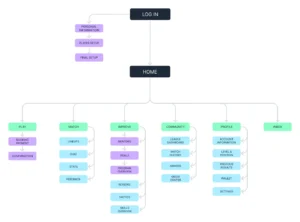
View Sitemap
Key structural decision
The architecture is not organized by technical functions, but by user intent.
Users do not think in terms of features; they think in terms of actions such as joining a match, following an active game, improving over time, or accessing group content. For this reason, the system was structured around distinct areas with clear purposes rather than around a flat list of tools.
This also meant avoiding a more fragmented architecture. Instead of multiplying sections and sub-sections, the structure keeps the experience compact and readable, making the path from access to participation and continuity easier to understand.
View Sitemap
6.2 User Flows
Once the structure is defined, the next step is to clarify how the most important parts of the system work in practice.
Rather than mapping every possible interaction, three flows were selected because they represent the core of the experience: entering the system, joining a match, and staying engaged over time. These flows are shown in the authentication, booking, and improve diagrams.
6.2 User Flows
Once the structure is defined, the next step is to clarify how the most important parts of the system work in practice.
Rather than mapping every possible interaction, three flows were selected because they represent the core of the experience: entering the system, joining a match, and staying engaged over time. These flows are shown in the authentication, booking, and improve diagrams.
Authentication flow
Read More
The onboarding flow is designed to reduce uncertainty and make the system understandable from the beginning. Users move from personal information to player setup and final setup, including role, skill definition, and rule acceptance. This supports clarity at entry and helps the system collect only the information needed to shape participation.
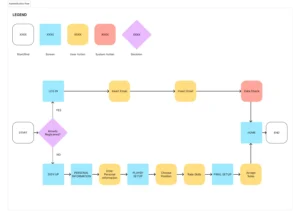
Booking flow
Read More
This is the most critical flow in the product. The main structural decision is to bring booking, payment, and confirmation into one sequence. This directly responds to one of the strongest research findings: participation becomes unreliable when access depends on speed, payment is handled separately, and expectations are clarified too late. The flow was intentionally designed to avoid fragmentation. Instead of forcing users to switch between tools, people, or separate steps, the system keeps the full participation process in one place. By doing so, the experience becomes more predictable, reduces external coordination, and makes expectations explicit before participation.
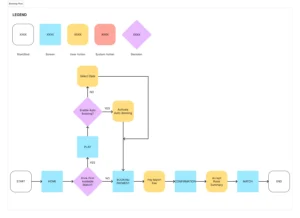
Improve flow
Read More
This flow supports continuity over time. Through mentor selection, goal setting, and program overview, it introduces a dedicated path for growth and sustained engagement. The flow makes improvement a recurring part of the experience rather than an optional extra.
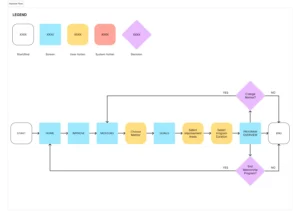
Authentication flow
Read More
The onboarding flow is designed to reduce uncertainty and make the system understandable from the beginning. Users move from personal information to player setup and final setup, including role, skill definition, and rule acceptance. This supports clarity at entry and helps the system collect only the information needed to shape participation.
Booking flow
Read More
This is the most critical flow in the product. The main structural decision is to bring booking, payment, and confirmation into one sequence. This directly responds to one of the strongest research findings: participation becomes unreliable when access depends on speed, payment is handled separately, and expectations are clarified too late. The flow was intentionally designed to avoid fragmentation. Instead of forcing users to switch between tools, people, or separate steps, the system keeps the full participation process in one place. By doing so, the experience becomes more predictable, reduces external coordination, and makes expectations explicit before participation.
Improve flow
Read More
This flow supports continuity over time. Through mentor selection, goal setting, and program overview, it introduces a dedicated path for growth and sustained engagement. The flow makes improvement a recurring part of the experience rather than an optional extra.
6.3 Structural Rationale
The architecture is guided by one main principle: prioritizing clarity and continuity over feature quantity. The sitemap defines the overall structure, while the flows clarify how the most important interactions are meant to work. Together, they translate the earlier design decisions into a system that is understandable, navigable, and aligned with the main problems identified during research. This is the point where the project shifts from selected ideas to product structure.
6.3 Structural Rationale
The architecture is guided by one main principle: prioritizing clarity and continuity over feature quantity. The sitemap defines the overall structure, while the flows clarify how the most important interactions are meant to work. Together, they translate the earlier design decisions into a system that is understandable, navigable, and aligned with the main problems identified during research. This is the point where the project shifts from selected ideas to product structure.
7. SOLUTION DESIGNED
7.1 Wireframes
After defining the structure and flows, wireframes were used to validate the clarity of the system before introducing visual design. The focus was not on visual exploration, but on verifying that:
- The main flows are understandable
- Interactions follow a clear and predictable logic
- Users can complete key actions without ambiguity
Key decisions
7. SOLUTION DESIGNED
7.1 Wireframes
After defining the structure and flows, wireframes were used to validate the clarity of the system before introducing visual design. The focus was not on visual exploration, but on verifying that:
- The main flows are understandable
- Interactions follow a clear and predictable logic
- Users can complete key actions without ambiguity
Key decisions
Onboarding (Player Setup)
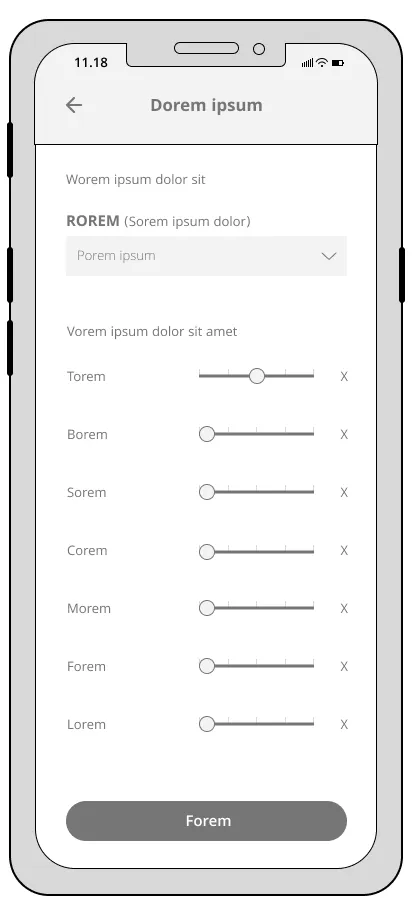
Information is distributed across multiple steps to reduce cognitive load.
Users progressively define their role, skill level, and profile, allowing the system to structure participation from the beginning.
This reflects an earlier decision:
Role and skill are not optional inputs
They are necessary to support team organization and fair play.
Booking (Play)
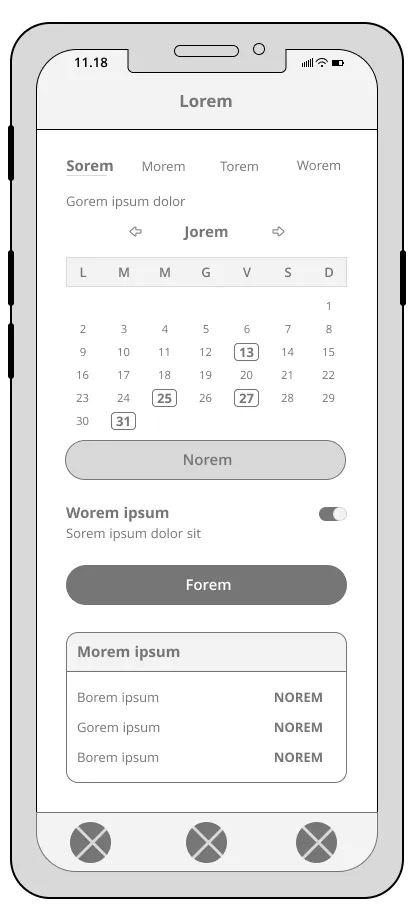
The calendar is the central element of the booking experience. This is not only a layout choice, but a direct translation of a core design decision: access should not depend on speed, but on visibility and planning. Making availability central helps shift participation away from reactive booking and toward a more structured system. Users can see available dates, understand constraints, and act within a clearer participation model rather than competing for access through timing alone.
Payment integration
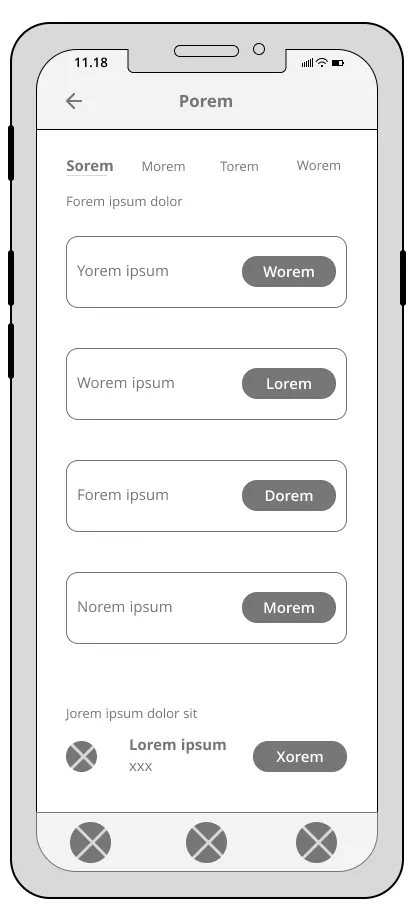
Payment is part of the same flow, not a separate step.
This decision:
- Removes fragmentation
- Avoids context switching
- Reinforces commitment before participation
The booking process becomes a continuous sequence rather than a set of disconnected actions.
Onboarding (Player Setup)
Information is distributed across multiple steps to reduce cognitive load.
Users progressively define their role, skill level, and profile, allowing the system to structure participation from the beginning.
This reflects an earlier decision:
Role and skill are not optional inputs
They are necessary to support team organization and fair play.
Booking (Play)
The calendar is the central element of the booking experience. This is not only a layout choice, but a direct translation of a core design decision: access should not depend on speed, but on visibility and planning. Making availability central helps shift participation away from reactive booking and toward a more structured system. Users can see available dates, understand constraints, and act within a clearer participation model rather than competing for access through timing alone.
Payment integration
Payment is part of the same flow, not a separate step.
This decision:
- Removes fragmentation
- Avoids context switching
- Reinforces commitment before participation
The booking process becomes a continuous sequence rather than a set of disconnected actions.
Onboarding (Player Setup)
Information is distributed across multiple steps to reduce cognitive load.
Users progressively define their role, skill level, and profile, allowing the system to structure participation from the beginning.
This reflects an earlier decision:
Role and skill are not optional inputs
They are necessary to support team organization and fair play.
Booking (Play)
The calendar is the central element of the booking experience. This is not only a layout choice, but a direct translation of a core design decision: access should not depend on speed, but on visibility and planning. Making availability central helps shift participation away from reactive booking and toward a more structured system. Users can see available dates, understand constraints, and act within a clearer participation model rather than competing for access through timing alone.
Payment integration
Payment is part of the same flow, not a separate step.
This decision:
- Removes fragmentation
- Avoids context switching
- Reinforces commitment before participation
The booking process becomes a continuous sequence rather than a set of disconnected actions.
7.2 Visual Direction
The visual design supports clarity, action, and consistency rather than aesthetic exploration.
7.2 Visual Direction
The visual design supports clarity, action, and consistency rather than aesthetic exploration.
Logo & Naming
The name Kick Fun reflects two key aspects of the experience:
- The activity itself (football)
- The social and accessible nature of participation
The logo reinforces this by:
- Integrating a goal structure
- Using a ball element within the wordmark
The objective is immediate recognition and readability, especially in mobile contexts.
Logo & Naming
The name Kick Fun reflects two key aspects of the experience:
- The activity itself (football)
- The social and accessible nature of participation
The logo reinforces this by:
- Integrating a goal structure
- Using a ball element within the wordmark
The objective is immediate recognition and readability, especially in mobile contexts.
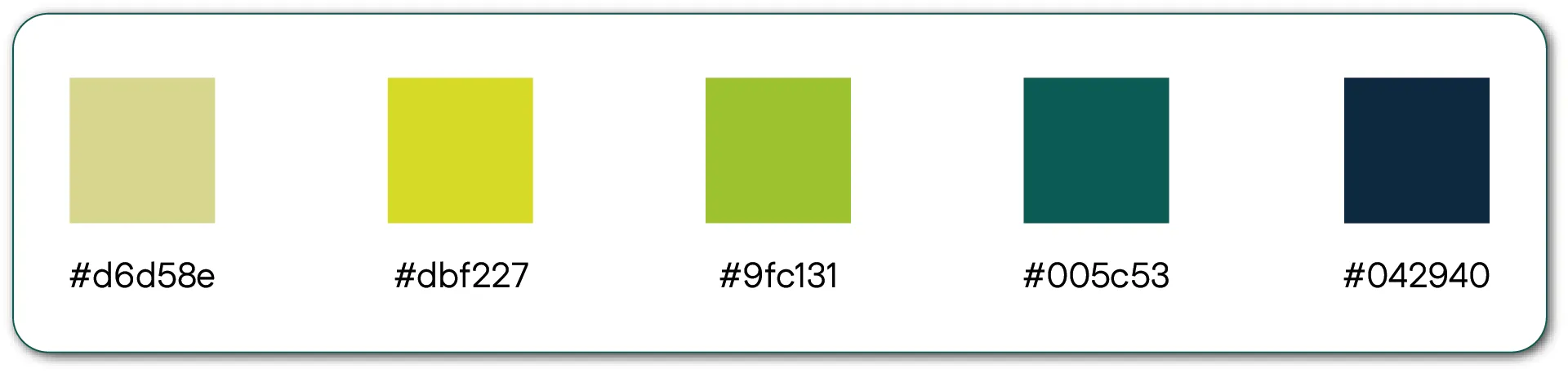
Color system
The palette is designed to support hierarchy and interaction:
- Dark tones create a stable background and reduce visual noise
- High-contrast accents highlight primary actions
- Neutral tones separate content from interaction
This makes interactive elements immediately recognizable, particularly in fast mobile usage.
Color system
The palette is designed to support hierarchy and interaction:
- Dark tones create a stable background and reduce visual noise
- High-contrast accents highlight primary actions
- Neutral tones separate content from interaction
This makes interactive elements immediately recognizable, particularly in fast mobile usage.
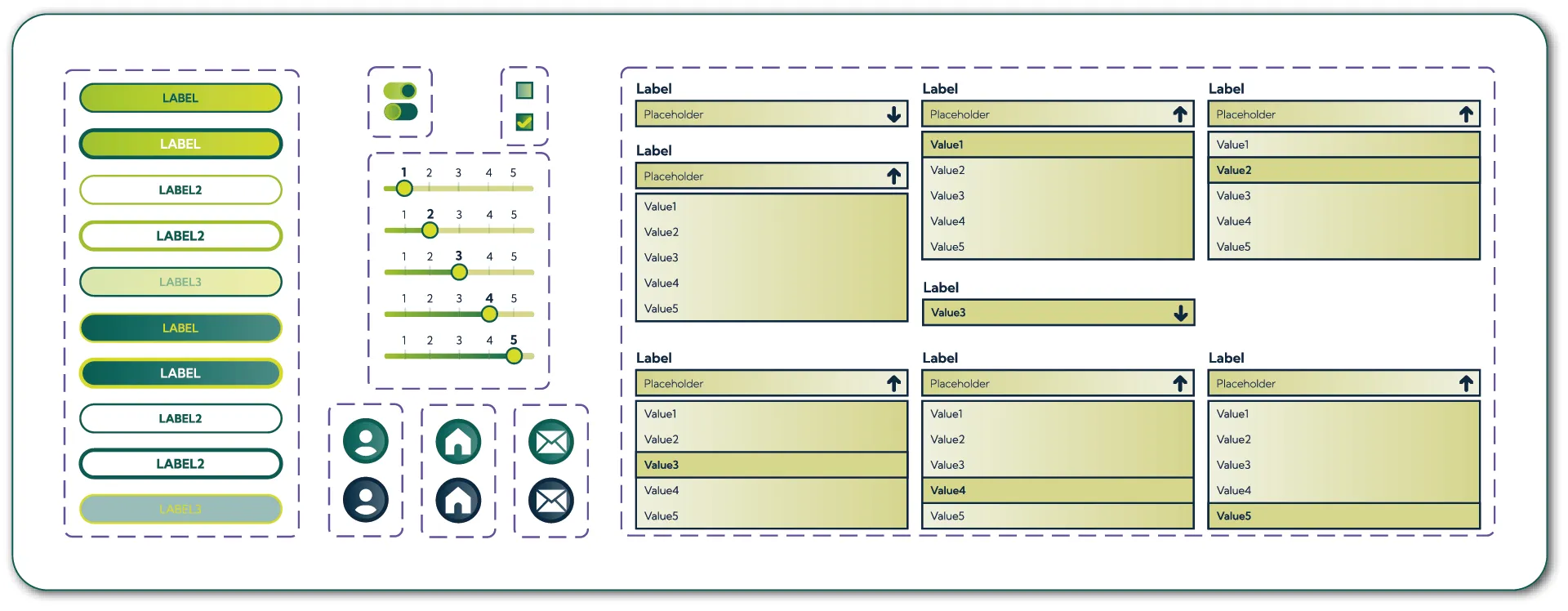
Components
The interface is based on a consistent set of reusable components.
Each component makes system logic explicit:
- Inputs and dropdowns reduce ambiguity in data entry
- Toggles and checkboxes define system states clearly
- Buttons reflect action availability (active/inactive states)
- Cards structure content across different sections
- Calendar supports direct interaction with availability
- Sliders simplify subjective inputs such as skill level
Consistency across states (default, active, inactive) ensures that users always understand what is possible and what has been selected.
Components
The interface is based on a consistent set of reusable components.
Each component makes system logic explicit:
- Inputs and dropdowns reduce ambiguity in data entry
- Toggles and checkboxes define system states clearly
- Buttons reflect action availability (active/inactive states)
- Cards structure content across different sections
- Calendar supports direct interaction with availability
- Sliders simplify subjective inputs such as skill level
Consistency across states (default, active, inactive) ensures that users always understand what is possible and what has been selected.
7.3 High-Fidelity Prototype
The final prototype translates structure and interaction logic into a cohesive experience.
7.3 High-Fidelity Prototype
The final prototype translates structure and interaction logic into a cohesive experience.
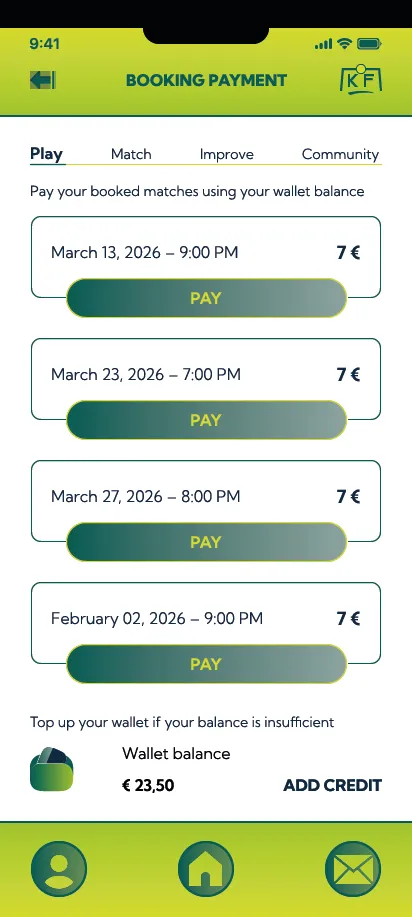
Booking
The sequence is continuous:
- Match selection
- Payment
- Confirmation
This reflects a core decision made during ideation: reduce fragmentation and external coordination.
Confirmation
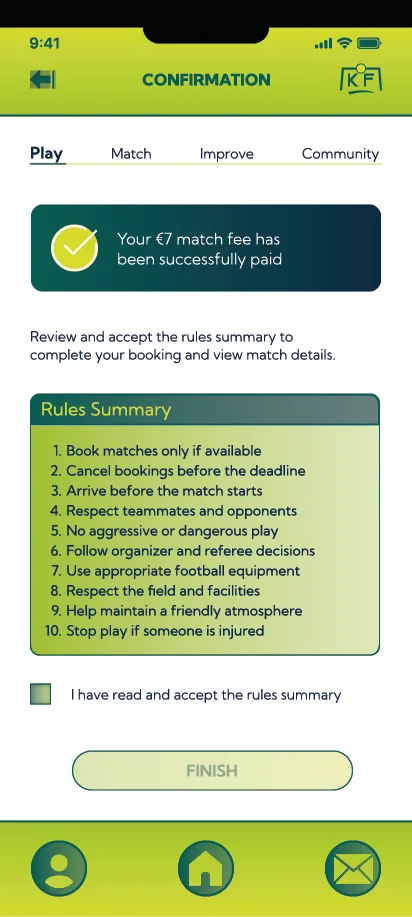
The confirmation step includes a summary of the rules.
This makes expectations explicit before participation and reinforces system-supported behavior.
Booking
The sequence is continuous:
- Match selection
- Payment
- Confirmation
This reflects a core decision made during ideation: reduce fragmentation and external coordination.
Confirmation
The confirmation step includes a summary of the rules.
This makes expectations explicit before participation and reinforces system-supported behavior.
Improve
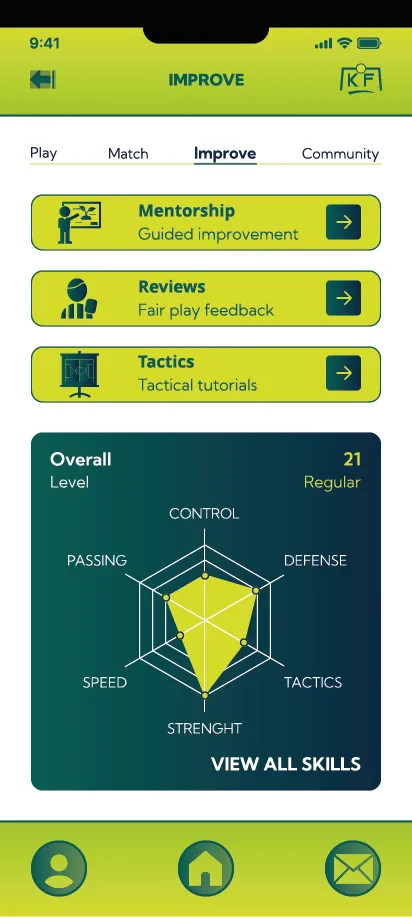
This section introduces continuity:
- Mentorship
- Goals
- Progress tracking
It transforms participation from a single event into an ongoing experience.
Match
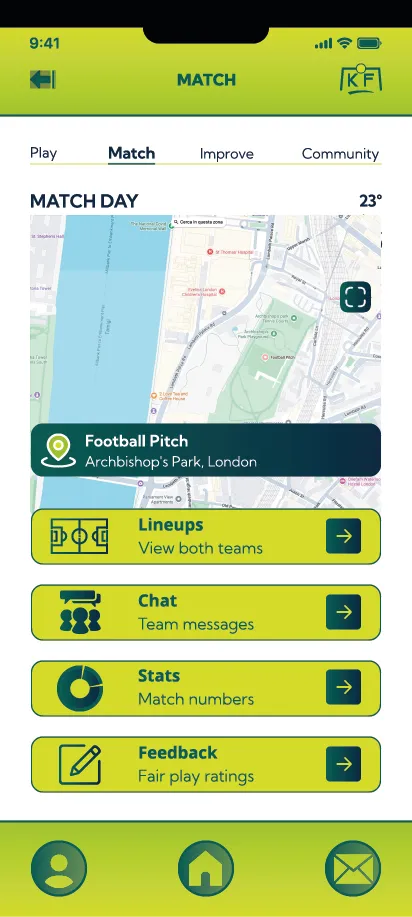
The match screen centralizes:
- Location
- Teams
- Communication
- Feedback
This avoids reliance on external tools and keeps the experience contained within the system.
Improve
This section introduces continuity:
- Mentorship
- Goals
- Progress tracking
It transforms participation from a single event into an ongoing experience.
Match
The match screen centralizes:
- Location
- Teams
- Communication
- Feedback
This avoids reliance on external tools and keeps the experience contained within the system.
7.4 Design Rationale
The design is guided by a single principle: clarity over complexity. Every decision, from structure to interface, is aligned with the main problems identified during research:
- Unreliable access
- Fragmented interactions
- Unclear expectations
- Lack of continuity
This also required trade-offs. The design intentionally prioritizes reliability, clarity, and flow integration over feature richness.
More layered social, analytical, or interactive elements were kept secondary whenever they risked adding complexity without improving the core experience.
The result is a system where actions are clear, flows are predictable, and participation is supported more consistently over time.
7.4 Design Rationale
The design is guided by a single principle: clarity over complexity. Every decision, from structure to interface, is aligned with the main problems identified during research:
- Unreliable access
- Fragmented interactions
- Unclear expectations
- Lack of continuity
This also required trade-offs. The design intentionally prioritizes reliability, clarity, and flow integration over feature richness.
More layered social, analytical, or interactive elements were kept secondary whenever they risked adding complexity without improving the core experience.
The result is a system where actions are clear, flows are predictable, and participation is supported more consistently over time.
8. TESTING
8. TESTING
8.1 Test Setup
A moderated remote usability test was conducted with 5 participants from the football group the product was designed for. All participants regularly play in the group; 4 had already taken part in the user interview phase, while one was the group founder and represented an expert-user perspective.
The sessions took place on Google Meet. Participants shared their screen, used the high-fidelity prototype in full-screen mode, and followed a think-aloud approach while completing three task-based flows:
- Onboarding and account creation
- Booking and paying for multiple matches
- Joining the improvement program by selecting a mentor and focus areas.
The analysis focused on task completion, hesitation points, misunderstandings, assistance needed, navigation choices, and post-test feedback.
8.2 What Worked
The test also helped identify which parts of the prototype were already working effectively.
The manual calendar supported the booking flow well. Participants were able to review available dates and select the matches they wanted to join without relevant friction.
Once participants reached the payment screen, the payment step was clear. The confirmation message also provided a clear sense of completion after payment.
The Improve flow worked well from an interaction perspective. Mentor selection, focus-area selection, and mentor change were completed smoothly by most participants.
8.1 Test Setup
A moderated remote usability test was conducted with 5 participants from the football group the product was designed for. All participants regularly play in the group; 4 had already taken part in the user interview phase, while one was the group founder and represented an expert-user perspective.
The sessions took place on Google Meet. Participants shared their screen, used the high-fidelity prototype in full-screen mode, and followed a think-aloud approach while completing three task-based flows:
- Onboarding and account creation
- Booking and paying for multiple matches
- Joining the improvement program by selecting a mentor and focus areas.
The analysis focused on task completion, hesitation points, misunderstandings, assistance needed, navigation choices, and post-test feedback.
8.2 What Worked
The test also helped identify which parts of the prototype were already working effectively.
The manual calendar supported the booking flow well. Participants were able to review available dates and select the matches they wanted to join without relevant friction.
Once participants reached the payment screen, the payment step was clear. The confirmation message also provided a clear sense of completion after payment.
The Improve flow worked well from an interaction perspective. Mentor selection, focus-area selection, and mentor change were completed smoothly by most participants.
8.3 Key Findings
The test surfaced five issues affecting clarity, hierarchy, and confidence at key decision points.
Read More
ONBOARDING RULES WERE UNCLEAR
Two participants interpreted the rules as selectable items, while none of the participants discovered the scroll independently. The rules section needed a clearer structure for reading, opening, and accepting the content.
BOOKING NEEDED ONE CLEAR PRIMARY ACTION
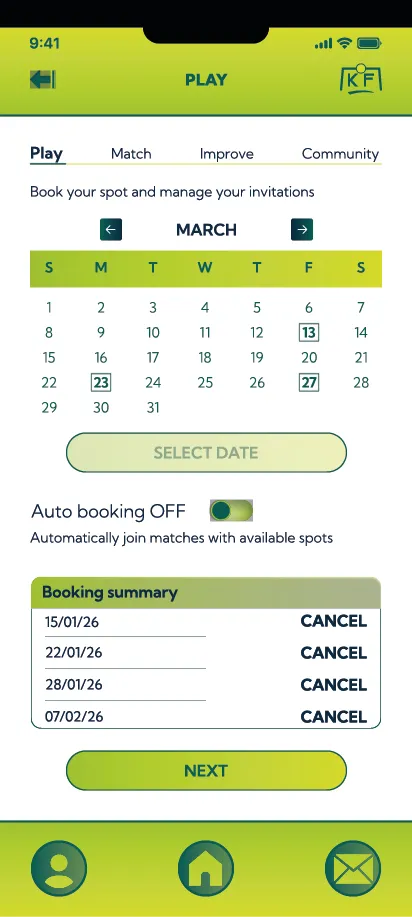
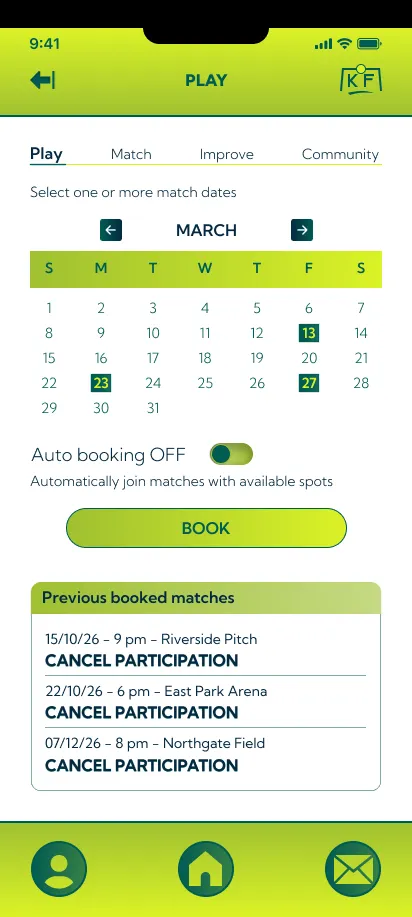
After selecting match dates, the presence of both “Book” and “Next” created uncertainty about the next step and required clarification during the task. The booking flow needed a stronger primary CTA.
BOOKED MATCHES WERE NOT CLEARLY FRAMED
Around half of the participants were unsure about the purpose of “Booking Summary”. The “Cancel” action was also unclear, because it did not communicate that it cancelled participation in an already booked and paid match.
PAYMENT MISSED KEY MATCH INFORMATION
Some participants expected to see the match location before paying. The wallet also needed stronger visibility in the payment flow, while multiple paid matches required clearer match-level actions.
CRITICAL ACTIONS NEEDED CLEARER FEEDBACK
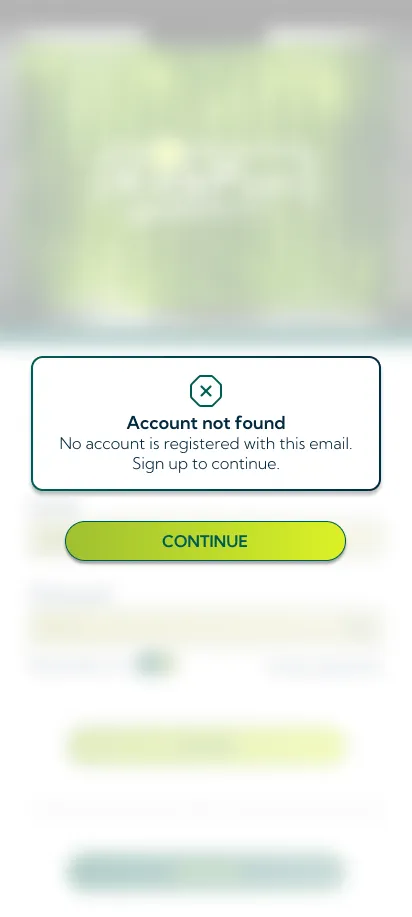
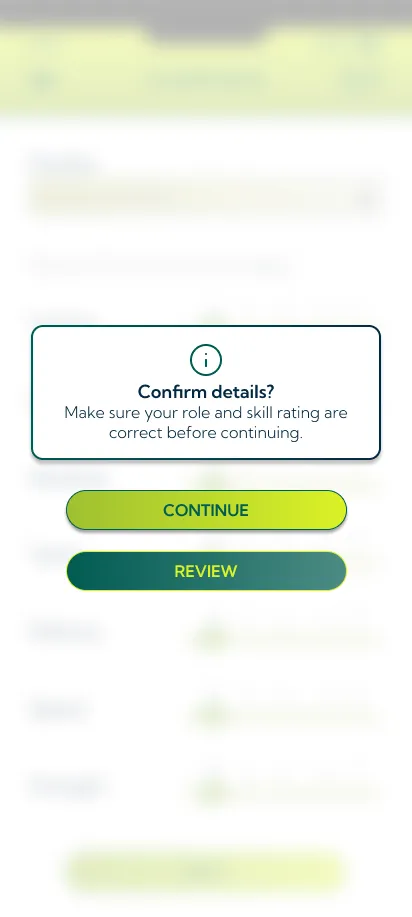
Some moments created uncertainty: new users attempted to log in before signing up, and “End program” in Improve could be misread. Confirmation messages were added to clarify sensitive actions before users continued.
8.3 Key Findings
The test surfaced five issues affecting clarity, hierarchy, and confidence at key decision points.
Read More
ONBOARDING RULES WERE UNCLEAR
Two participants interpreted the rules as selectable items, while none of the participants discovered the scroll independently. The rules section needed a clearer structure for reading, opening, and accepting the content.
BOOKING NEEDED ONE CLEAR PRIMARY ACTION
After selecting match dates, the presence of both “Book” and “Next” created uncertainty about the next step and required clarification during the task. The booking flow needed a stronger primary CTA.
BOOKED MATCHES WERE NOT CLEARLY FRAMED
Around half of the participants were unsure about the purpose of “Booking Summary”. The “Cancel” action was also unclear, because it did not communicate that it cancelled participation in an already booked and paid match.
PAYMENT MISSED KEY MATCH INFORMATION
Some participants expected to see the match location before paying. The wallet also needed stronger visibility in the payment flow, while multiple paid matches required clearer match-level actions.
CRITICAL ACTIONS NEEDED CLEARER FEEDBACK
Some moments created uncertainty: new users attempted to log in before signing up, and “End program” in Improve could be misread. Confirmation messages were added to clarify sensitive actions before users continued.
8.4 Design Iterations
8.4 Design Iterations
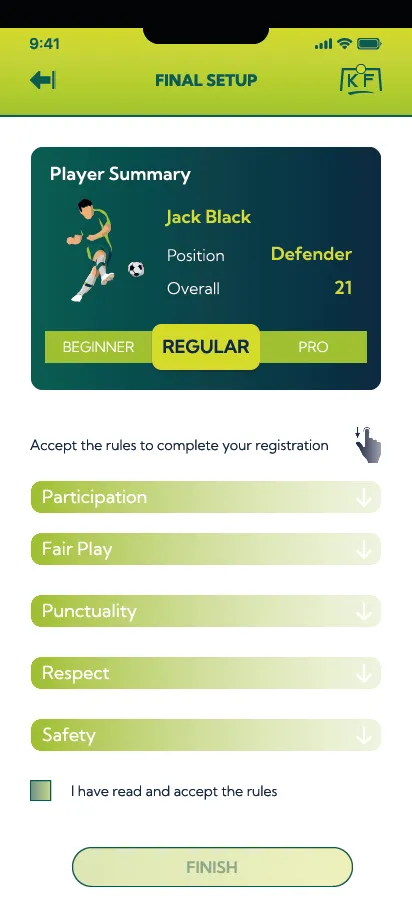
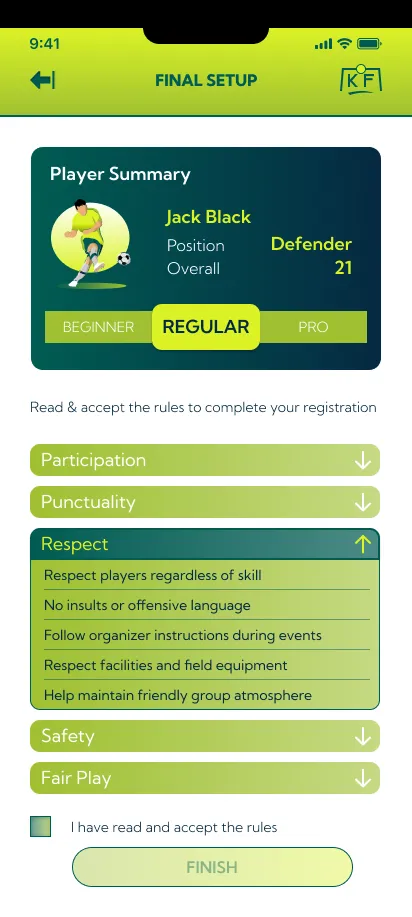
Onboarding Rules
Making rules easier to read and accept
Onboarding Rules
Making rules easier to read and accept
Booking Screen
Simplifying booking actions and match management
Booking Screen
Simplifying booking actions and match management
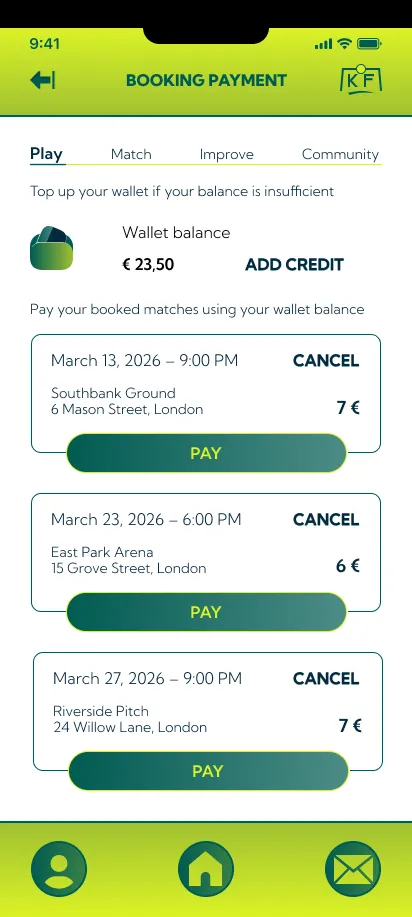
Payment Page
Adding match context before payment
Payment Page
Adding match context before payment
Confirmation Messages
Clarifying critical actions before confirmation
Confirmation Messages
Clarifying critical actions before confirmation
9. CONCLUSION
9.1 Result
Kick Fun moved the group’s match-joining process from an informal, organizer-driven routine to a clearer mobile-first service flow.
The final prototype brought together the core experience: account creation, role and skill setup, rule acceptance, match booking, payment, paid-match management, and a first layer of long-term improvement through mentorship.
Usability testing helped refine the areas where the experience needed stronger clarity: rule interaction, booking hierarchy, paid booking management and the information users need before committing to payment.
9. CONCLUSION
9.1 Result
Kick Fun moved the group’s match-joining process from an informal, organizer-driven routine to a clearer mobile-first service flow.
The final prototype brought together the core experience: account creation, role and skill setup, rule acceptance, match booking, payment, paid-match management, and a first layer of long-term improvement through mentorship.
Usability testing helped refine the areas where the experience needed stronger clarity: rule interaction, booking hierarchy, paid booking management and the information users need before committing to payment.
9.2 Future Impact
Future iterations could extend the product beyond the core booking flow, developing concepts from the ideation phase into more complete community and engagement features.
The first opportunity is the post-match layer: score reports, player stats, and a photo/video archive could turn each match into a shared record and make progress easier to track over time.
The second opportunity is stronger group coordination: pre-match team chat, behavioural feedback, and group status could support communication, accountability, and fair play within the community.
The third opportunity is long-term engagement: hall of fame, tactical content, and selected reward mechanics could encourage return use while keeping the product grounded in its main goal: making participation more reliable before expanding the experience.
9.2 Future Impact
Future iterations could extend the product beyond the core booking flow, developing concepts from the ideation phase into more complete community and engagement features.
The first opportunity is the post-match layer: score reports, player stats, and a photo/video archive could turn each match into a shared record and make progress easier to track over time.
The second opportunity is stronger group coordination: pre-match team chat, behavioural feedback, and group status could support communication, accountability, and fair play within the community.
The third opportunity is long-term engagement: hall of fame, tactical content, and selected reward mechanics could encourage return use while keeping the product grounded in its main goal: making participation more reliable before expanding the experience.