PROJECT OVERVIEW
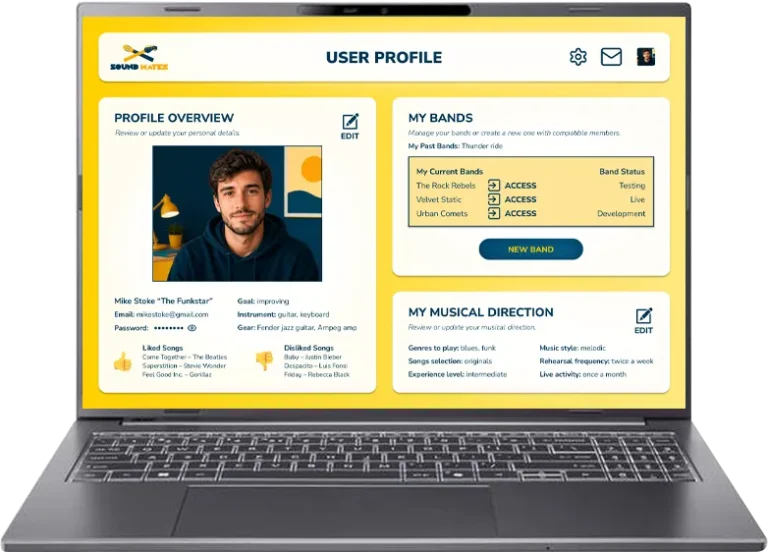
Sound Mates is a desktop web platform that helps amateur musicians form bands around shared musical direction, compatibility, and practical availability. The project focuses on making early collaboration more reliable by turning informal signals such as taste, goals, commitment, and rehearsal habits into clearer decision points before and after a band is formed.
My Role
End-to-end
UX Researcher and
UX/UI Designer
Timeline
8 weeks
Tools
Figma
FigJam
Adobe Illustrator
Adobe Photoshop

PROJECT OVERVIEW
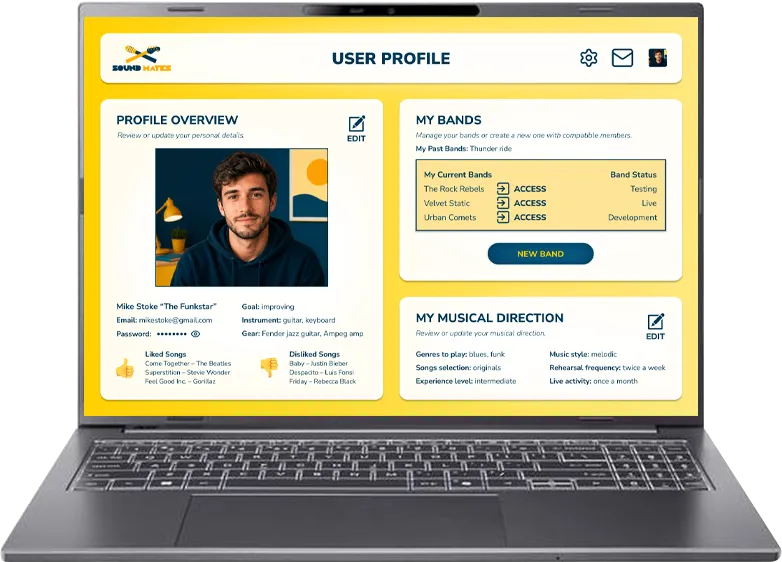
Sound Mates is a desktop web platform that helps amateur musicians form bands around shared musical direction, compatibility, and practical availability. The project focuses on making early collaboration more reliable by turning informal signals such as taste, goals, commitment, and rehearsal habits into clearer decision points before and after a band is formed.
My Role
End-to-end
UX Researcher and
UX/UI Designer
Timeline
8 weeks
Tools
Figma
FigJam
Adobe Illustrator
Adobe Photoshop
PROJECT OVERVIEW
Sound Mates is a desktop web platform that helps amateur musicians form bands around shared musical direction, compatibility, and practical availability. The project focuses on making early collaboration more reliable by turning informal signals such as taste, goals, commitment, and rehearsal habits into clearer decision points before and after a band is formed.
My Role
End-to-end
UX Researcher and
UX/UI Designer
Timeline
8 weeks
Tools
Figma
FigJam
Adobe Illustrator
Adobe Photoshop

EMPHATIZE

DEFINE

IDEATE

PROTOTYPE

TEST
1. PROJECT INTRODUCTION
Context
Amateur musicians often move from individual practice to band collaboration through informal paths such as personal networks, social media, or direct selection of musicians. These channels can help people connect, but they offer limited support for understanding musical direction, commitment, availability, and personal fit before a collaboration begins.
Once a band is formed, coordination remains mostly informal. Responsibilities, rehearsal planning, space access, and session structure are handled through chats, polls, and personal initiative, making the experience dependent on individual effort rather than shared clarity.
Problem
The current experience makes early collaboration unstable. Musicians often rely on informal channels to find bandmates, with limited ways to assess musical direction, commitment, and personal fit before starting. Once a band forms, rehearsal scheduling and session planning remain fragmented, while access to suitable rehearsal spaces depends on scattered information and manual coordination. As a result, bands often discover critical misalignments only after time and effort have already been invested.
Goal
The goal is to design a system that supports musicians in forming and developing a band with greater clarity and alignment from the beginning. The focus is on making compatibility easier to understand before commitment, simplifying rehearsal coordination, improving access to rehearsal spaces, and supporting more effective rehearsal sessions.
Design Strategy
The design strategy was to treat band formation as a compatibility problem before treating it as a management problem. Instead of simply adding coordination tools, the platform surfaces the signals that usually remain implicit such as musical direction, expectations, availability, commitment, and rehearsal habits. Structure is introduced only where it helps musicians make better collaboration decisions without removing the informal and creative nature of playing in a band.
Solution
A desktop web platform that organizes band-related activities into a more coherent experience, connecting actions that are currently handled separately.
Core areas:
- Individual setup → capturing relevant signals about the musician
- Group formation → supporting the creation and definition of a band
- Activity coordination → organizing rehearsals and related logistics
Results
The project reframes band formation as an early compatibility and collaboration challenge, not only as a management problem. By surfacing key signals before commitment and connecting rehearsal planning with space selection and session structure, the platform helps musicians make more informed decisions and reduce friction as the band develops.
Process
The work follows a structured UX approach, moving from observation of real behaviors to progressively narrowing the scope around the most recurring friction points.
Research was used to identify where the experience breaks down, while later phases focused on translating those issues into a system that could support collaboration more consistently.
2. RESEARCH
2.1 Research Introduction
Context
The research explores how amateur musicians move from playing alone to playing in a band, and what happens once they start working together. This transition usually happens through personal contacts or social platforms, without a shared system to support it.
Read More
Once in a band, musicians have to manage different activities at the same time, including rehearsals, writing music, organizing schedules, preparing live shows, and handling basic logistics. These activities often happen within the same moments, for example during rehearsals, where setup, coordination, and creative work are mixed together.
In this context, collaboration depends on how people align in practice. Musicians need to deal with differences in taste, goals, availability, and level of commitment while trying to keep the band active over time.
Research Problem
Collaboration between musicians does not follow a shared way of working.
How bands are formed, how time is organized, and how responsibilities are handled changes from case to case and depends on personal habits rather than a common approach.
Read More
Musicians often start playing together without clearly knowing each other’s expectations, availability, or level of commitment, while coordination tasks such as scheduling rehearsals are managed through chats, polls, or individual initiative. This leads to repeated adjustments during collaboration, as decisions are made while the band is already active rather than being clarified beforehand.
Objectives
The research focuses on understanding how musicians actually collaborate when playing in a band:
Read More
- How people find others to play with and what information they use to decide if it makes sense to start playing together
- How band members organize rehearsals in practice, including how they agree on dates and deal with conflicting availability
- What happens during rehearsals, from setup and coordination to playing and developing ideas
- How responsibilities and decisions are handled between members without a clearly defined structure
- How musicians find and choose rehearsal spaces, and how they manage activities such as live shows and promotion
Methods
The research combines competitor analysis and user interviews to understand both existing solutions and real collaboration practices.
Read More
Competitor analysis was used to identify how current tools support band activities and where gaps remain, especially before a band is formed.
User interviews were conducted to observe how musicians actually find bandmates, organize rehearsals, and manage collaboration over time. A group interview was included to see how decisions, roles, and coordination happen in practice within an existing band.
2.2 Competitor Analysis
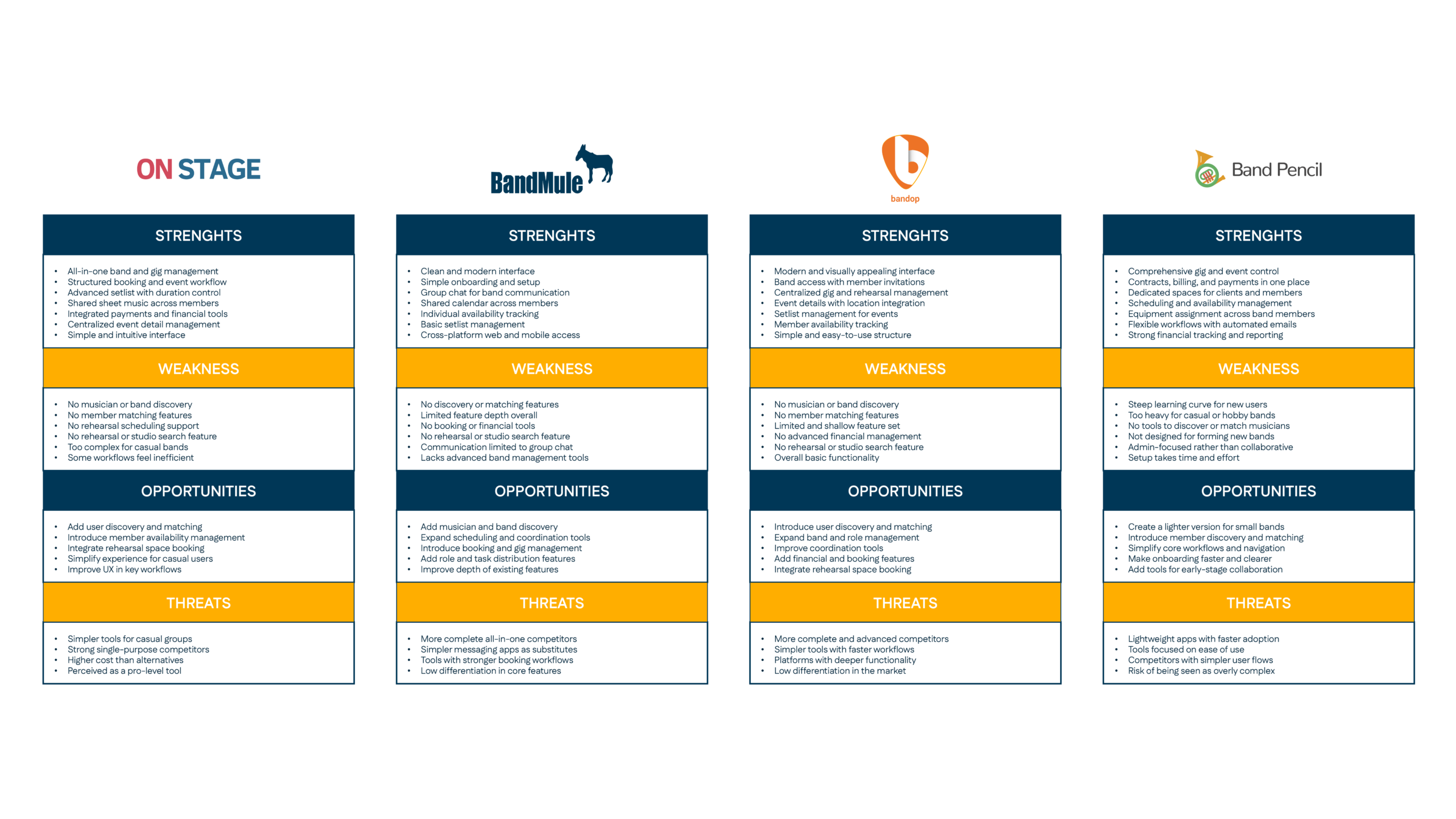
Tools like Back On Stage and Bandpencil are built to manage bands that already exist, with features for gigs, finances, and scheduling, but they are complex and not suited for casual use. Simpler tools such as Bandmule and Bandop are easier to use but mainly cover communication, shared calendars, or basic coordination.
Read More
None of these tools support how musicians decide to play together. There is no way to understand differences in direction, expectations, or level of involvement before or during collaboration. In practice, musicians still rely on chats, social media, and separate tools to handle rehearsals, spaces, and coordination. Activities that are closely connected are managed in different places, making collaboration harder to handle over time.
View Competitor Analysis
View Competitor Analysis
2.3 User Interviews
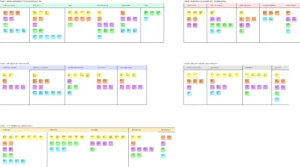
The affinity map highlights recurring patterns in how musicians experience being in a band. Finding people to play with often depends on personal networks, and once a band is formed, differences in musical taste, goals, and level of commitment quickly become visible. These differences affect both the creative direction of the band and how seriously members approach rehearsals and live activities.
Rehearsals are a central moment where multiple issues overlap. Musicians struggle to find common time slots, sessions are often unstructured, and part of the time is lost in coordination or setup.
Read More
At the same time, access to suitable rehearsal spaces is inconsistent, with limited information and fragmented options.
Beyond rehearsals, collaboration extends to preparing live shows, promoting the band, and managing relationships between members.
Personal motivations and group dynamics play a key role in whether a band continues over time, as differences between members tend to surface while working together rather than being addressed beforehand.
View Affinity Map
View Affinity Map
2.4 Research Summary
The research shows that musicians manage collaboration through separate and informal processes. Finding people, organizing rehearsals, and handling activities rely on personal networks, chats, and individual coordination.
Across interviews, the same patterns repeat. Musicians start playing together without clearly understanding differences in direction, expectations, or commitment. Rehearsals are difficult to schedule, sessions are often unstructured, and access to spaces and opportunities is fragmented. Roles and responsibilities are not defined upfront but emerge over time.
These issues are connected. Decisions are made while the band is already active, increasing friction as activities grow and making collaboration harder to sustain.
The next phase focuses on identifying where these problems concentrate, in order to define a smaller set of key issues grounded in real collaboration.
3. DEFINE
3.1 Insight from Competitor Analysis
- Current tools address specific parts of band collaboration but fail to support it as a continuous process across its full lifecycle. Most solutions focus either on operational management or lightweight coordination, without connecting the different stages of collaboration.
- Early-stage discovery and compatibility assessment are largely missing. Rehearsal organization, space access, and live activity management are often fragmented or treated as separate problems rather than interconnected parts of the same system.
- More advanced platforms tend to increase complexity without addressing the core issue of continuity across collaboration phases. As a result, musicians rely on multiple disconnected tools to manage different aspects of the same workflow.
3.2 Point Of View
- A musician needs to connect with people who align in personality, musical taste, and goals, because deep misalignment often leads to band breakups.
- A musician needs a reliable way to find or join a band, because current options make the process slow and uncertain.
- A band needs clear definition of each member’s responsibilities, because unclear expectations around non-musical tasks create confusion and imbalance.
- A band needs a simple way to agree on rehearsal times, because coordinating schedules is difficult and disrupts consistency.
- A band needs a shared approach to structuring rehearsals, as sessions often lose focus between setup time, improvisation, and on-the-fly decisions.
- A musician needs easy access to rehearsal and recording spaces, because current options are fragmented and difficult to navigate.
- A band needs a way to capture and develop ideas during rehearsals, as spontaneous creativity is often lost without proper recording and organization.
- A band needs more accessible and suitable live performance opportunities, as venues are limited and often not fit for proper shows.
- A band needs more effective ways to promote their music and live shows, as current channels rarely translate into real visibility.
- A band needs a clear way to organize live performances, as managing gigs without structure leads to confusion and poor outcomes.
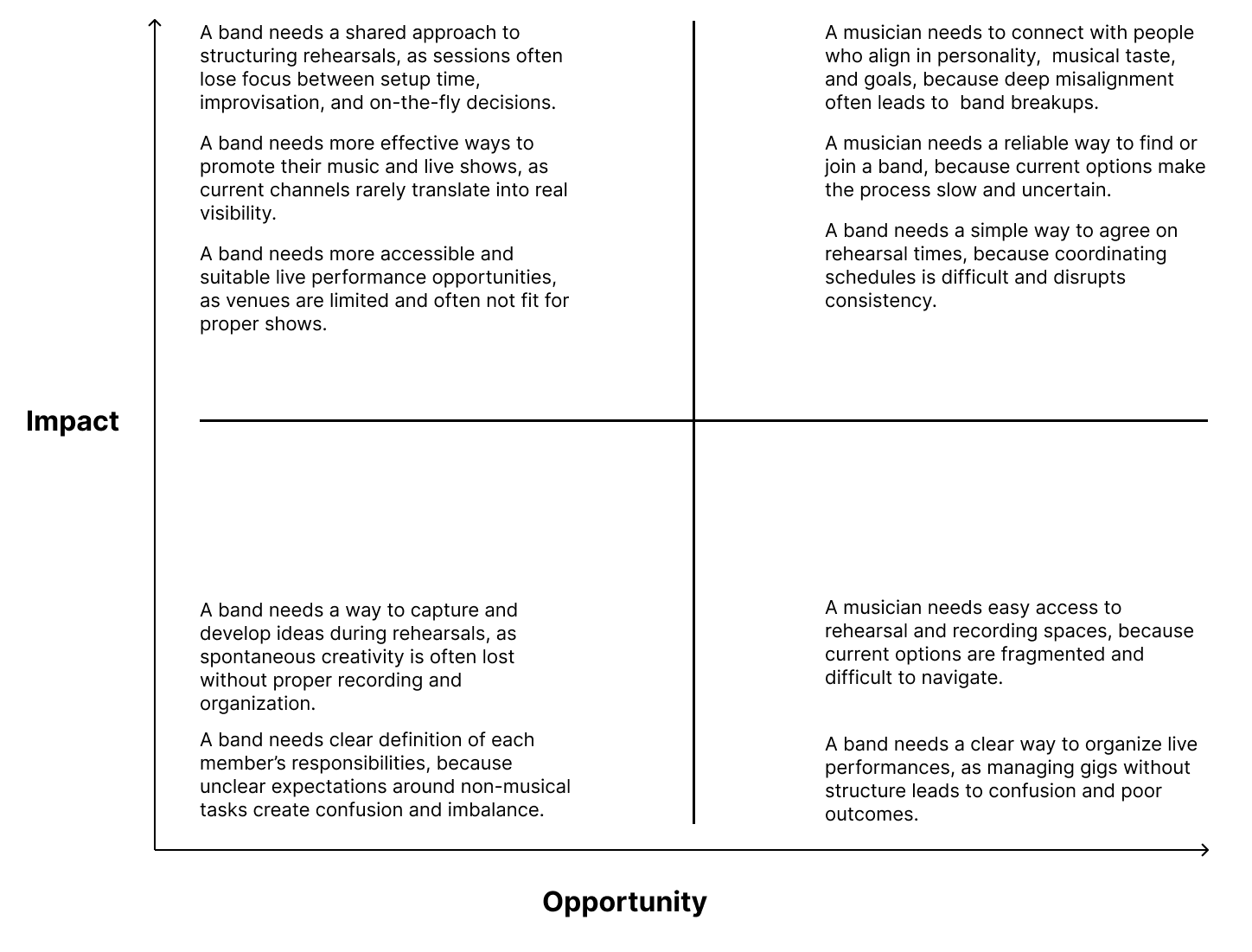
Impact vs Opportunity matrix
To narrow down the focus, the POVs were mapped on an Impact vs Opportunity matrix. Impact reflects how often these situations create friction in real collaboration, while opportunity highlights where there is room to intervene based on the limits of existing tools.
Read More
This step was used to identify where problems concentrate in practice, especially when choosing who to play with, organizing rehearsals, and managing shared activities.
The outcome is a focus on five key situations:
- finding a band
- assessing compatibility
- coordinating rehearsals
- accessing rehearsal spaces
- structuring rehearsal sessions
View Impact - Opportunity Matrix
View Impact - Opportunity Matrix
3.3 Selected POV
To prioritize the insights extracted from research, the selected POVs were evaluated based on their impact on real collaboration breakdowns and the frequency with which they occur in practice.
This prioritization highlights three dominant friction areas across the system:
- early compatibility assessment
- coordination of rehearsals
- access to operational resources such as spaces and structured rehearsal planning
These areas represent the points where misalignment most frequently affects the continuity of a band over time
Read More
1
A musician needs a reliable way to find or join a band, because current options make the process slow and uncertain.
2
A musician needs to connect with people who align in personality, musical taste, and goals, because deep misalignment often leads to band breakups.
3
A band needs a simple way to agree on rehearsal times, because coordinating schedules is difficult and disrupts consistency.
4
A musician needs easy access to rehearsal and recording spaces, because current options are fragmented and difficult to navigate.
5
A band needs a shared approach to structuring rehearsals, as sessions often lose focus between setup time, improvisation, and on-the-fly decisions.
3.4 User Personas
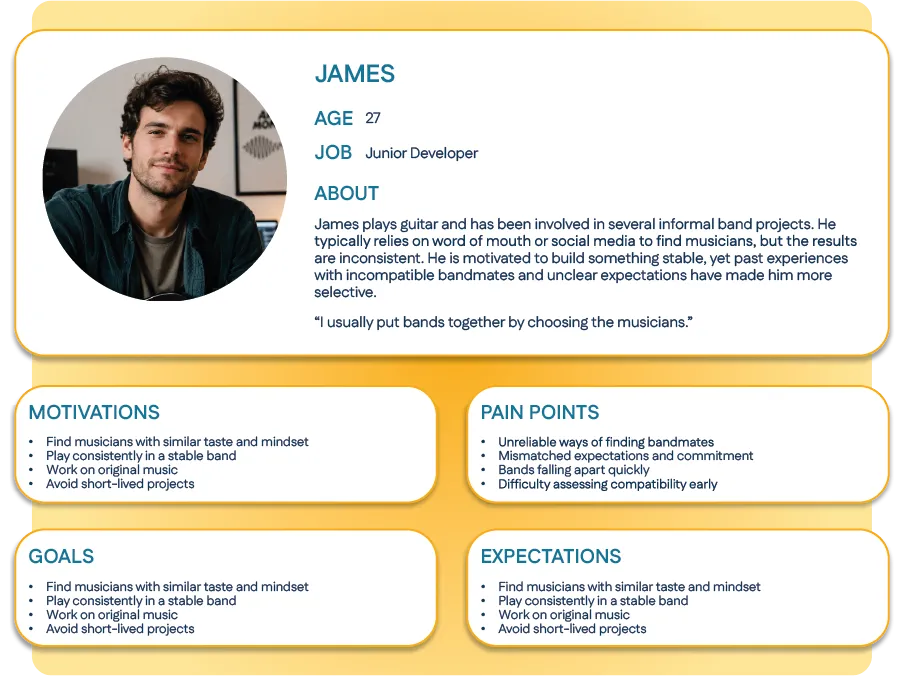
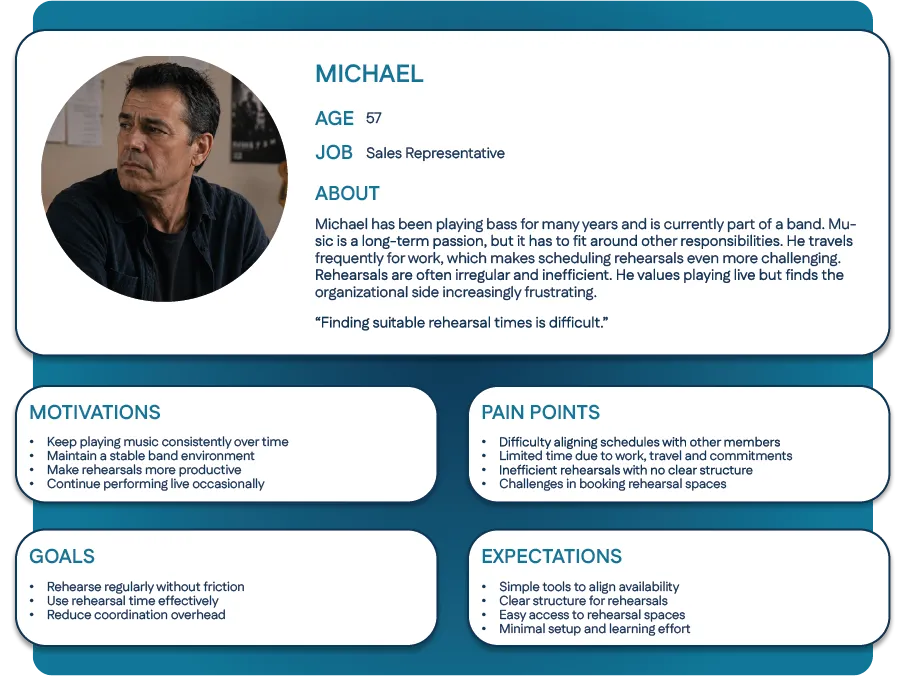
User personas were introduced as an intermediate synthesis layer between research and solution definition. Their role was to translate recurring behavioural patterns identified in interviews into concrete user archetypes, making it possible to prioritise needs across different types of musicians rather than treating the findings as abstract observations.
Read More
In practice, the personas served three functions.
First, they acted as a validation bridge for the POVs, ensuring that identified problems (compatibility, coordination, rehearsal structure) were consistently observable across distinct user profiles with different constraints.
Second, they were used as a prioritisation filter during ideation, helping to focus design decisions on scenarios that repeatedly occurred across both profiles rather than isolated edge cases.
Third, they grounded later design choices in behavioural context, ensuring that interface and system decisions (especially around scheduling complexity and onboarding structure) were aligned with real usage constraints rather than assumptions.
This step ensured continuity between qualitative research and system design, maintaining traceability from raw behavioural data to functional product decisions.
View User Persona James
View User Persona Michael
View User Persona James
View User Persona Michael
3.5 How Might We questions
The selected POVs are translated into How Might We questions to explore different ways to address the same situations.
Read More
A musician needs a reliable way to find or join a band, because current options make the process slow and uncertain.
- How might we help musicians understand early on whether they are compatible in terms of personality and goals?
- • How might we help musicians identify shared musical taste and direction before committing to a band?
A musician needs to connect with people who align in personality, musical taste, and goals, because deep misalignment often leads to band breakups.
- How might we make it easier and more reliable for musicians to find others to form a band from scratch?
A band needs a simple way to agree on rehearsal times, because coordinating schedules is difficult and disrupts consistency.
- How might we help bands easily agree on when to rehearse?
A musician needs easy access to rehearsal and recording spaces, because current options are fragmented and difficult to navigate.
- How might we help musicians find rehearsal and recording spaces across different budget ranges?
- How might we help musicians assess the quality of a space before choosing it?
A band needs a shared approach to structuring rehearsals, as sessions often lose focus between setup time, improvisation, and on-the-fly decisions.
- How might we help bands define what to focus on during each rehearsal?
4. IDEATE
4.1 Idea Generation — Analogous Inspiration
The ideation phase builds on the How Might We questions by exploring different contexts where similar problems are already structured. Each context is used to extract principles that are then translated into ideas.
HOW MIGHT WE HELP MUSICIANS UNDERSTAND EARLY ON WHETHER THEY ARE COMPATIBLE IN TERMS OF PERSONALITY AND GOALS?
Contexts where compatibility is evaluated before collaboration, focusing on how people decide whether to start interacting or working together, including dating platforms and recruiting systems.
DATING APP
Compatibility as a combination of signals
Collect structured, multi-dimensional data during onboarding, including background, experience, goals, motivation, availability, and previous band involvement
Mutual intent before interaction
Messaging is enabled only between users with compatible intent signals defined through tag
RECRUITING SYSTEM
Step-by-step validation
Ability to set up an initial rehearsal or meeting to test compatibility in practice
Credibility through third-party validation
A feedback system from past collaborations generates reliability indicators on the profile, reflecting aspects such as commitment, preparation, and collaboration style
HOW MIGHT WE HELP MUSICIANS IDENTIFY SHARED MUSICAL TASTE AND DIRECTION BEFORE COMMITTING TO A BAND?
Contexts where personal preferences and creative direction need to be translated into comparable signals, including recommendation systems and political campaigns.
NETFLIX RECOMMENDATION
Multi-dimensional taste modeling
Spotify integration allows users to select a set of representative tracks—both liked and disliked—which are used to generate a comparable musical taste profile across users.
Continuous and adaptive profiling
The user’s musical profile evolves with their preferences, and search results reflect these changes even when the same filters are used.
POLITICAL CAMPAIGN
Clear positioning across key issues
A user profile built on six key dimensions (cover vs original, genres to play, approach to music, rehearsal frequency, live activity, technical level and experience) to clearly express and compare each musician’s direction
Combination of explicit statements and observable actions
Band pages allow members to share audio tracks and provide peer ratings, optionally supported by brief written feedback. Each user profile links to a history of past bands, giving access to all associated band pages.
HOW MIGHT WE MAKE IT EASIER AND MORE RELIABLE FOR MUSICIANS TO FIND OTHERS TO FORM A BAND FROM SCRATCH?
Contexts where groups are formed through defined roles and structured selection processes, including film casting and fantasy football systems.
FILM CASTING
Role-driven matching
A user sets up a band by creating a guided listing that outlines the project and specifies which musicians are still needed, with clear requirements for each instrument. Users are only shown relevant opportunities that meet a minimum level of fit with their profile, based on a flexible match across shared criteria. Each open position is tracked within the listing and updates automatically once filled.
Audition-based evaluation
After an initial screening, the user who created the listing assigns a role-specific task, providing a track and brief project guidelines. The candidate can either withdraw or submit a recorded performance, which is then reviewed and discussed through a short chat.
FANTASY FOOTBALL
Predefined framework for group formation
Users can create a band profile by selecting a predefined band type based on a combination of six key dimensions, which sets the project’s direction upfront. Alternatively, they can define these parameters manually to build a custom band profile.
Recurring collective touchpoints
Once the band is complete, members collaboratively define key identity elements such as the name, logo, reference playlist, and social channels, marking the transition into a shared group
HOW MIGHT WE HELP BANDS EASILY AGREE ON WHEN TO REHEARSE?
Contexts where multiple participants coordinate availability under constraints and limited time, including structured scheduling situations like parent-teacher meetings and team planning systems.
PARENT-TEACHER MEETING
Handling overflow through deferral
The system defines predefined rehearsal types with set duration, goals, and required members, while the band sets a status reflecting its current phase. Based on available time and space, the most relevant rehearsal is scheduled, and the remaining ones are deferred to future sessions.
Priority-based decision making
Rehearsals are scheduled by weighing conflicting availabilities through a structured hierarchy of commitments, where not all constraints are treated equally. When no fully shared slot exists, the system identifies the option with the least critical trade-offs, while ensuring each member’s availability matches the rehearsal frequency set in their profile and aligned with the band’s goals.
CORPORATE TEAM BUILDING
Phased decision-making with fallback
Rehearsal planning is handled as a step-by-step process: members provide their commitments and preferences, the system evaluates possible time slots by prioritizing constraints and favoring shared preferences, then checks room availability and progressively moves to the next best option until a feasible solution is reached.
Equal-weight voting among employees
A rotating facilitator, changing every four rehearsals, is responsible for driving the scheduling process forward within the system. Timely notifications prompt each stage, while final decisions remain collectively shared across all band members.
HOW MIGHT WE HELP MUSICIANS FIND REHEARSAL AND RECORDING SPACES ACROSS DIFFERENT BUDGET RANGES?
Contexts where users compare and select options within structured marketplaces, including booking systems and real estate platforms.
HOTEL BOOKING
User-based validation through reviews
Each rehearsal space has a dedicated profile with an average rating and user reviews. Each review is linked to actual usage history, showing how many times the user has used that space and with which bands, providing a credibility signal to support decisions between options at the same price level.
Price range as a decision reference
After selecting a date, rehearsal spaces are organized into price tiers, with the system initially surfacing the range that best fits the band’s musical approach. Users can stick with this starting point or move across tiers as they prefer.
REAL ESTATE PLATFORMS
Visual-driven exploration of options
Rehearsal spaces are showcased through photos and optional 3D tours, enabling users to grasp the layout and atmosphere at a glance before diving into detailed information.
Contextual positioning within the market
Last-minute discounted rehearsal spaces are surfaced within their price tier and shown next to comparable options, so users can quickly recognize their relative value within the broader set of choices.
HOW MIGHT WE HELP MUSICIANS ASSESS THE QUALITY OF A SPACE BEFORE CHOOSING IT?
Contexts where quality is evaluated through structured parameters before direct experience, including configurable systems and guided selection platforms.
PC CONFIGURATION TOOLS
Standardized and interdependent structure of components
Rehearsal spaces are presented using a consistent set of parameters scored from 1 to 5, allowing users to scan and compare options at a glance; each parameter can be opened to access more detailed descriptions of the space.
Continuous validation of compatibility
The system translates the band’s and user’s goals into a set of coherent room setups, each combining key parameters into meaningful configurations. Once a setup is chosen, spaces aligned with it are surfaced first after selecting a date, while users can still browse the full set of options if they prefer.
FOOD DELIVERY
Guided discovery with open exploration
Users can either start by picking a date to view what’s available, or explore rehearsal spaces through curated categories. After selecting a space, its availability is revealed and aligned with the band’s schedule to highlight suitable options.
Focused offering as a signal of quality
Users can find rehearsal spaces either by choosing from a set of clearly defined features or by typing their own search terms. The system highlights spaces built around that specific focus, providing full details, pricing, and time slots that fit the band’s availability.
HOW MIGHT WE HELP BANDS DEFINE WHAT TO FOCUS ON DURING EACH REHEARSAL?
Contexts where group activities are structured into goal-driven sessions and coordinated workflows, including sports training and professional kitchen environments.
FOOTBALL TEAM TRAINING
Goal-driven modular sessions
The band sets a project phase that shapes what the rehearsal should focus on. The system then proposes a set of relevant activity blocks, which users can rearrange, modify, and combine to match the planned session length.
Balancing individual and team-focused activities
Members can initiate one-off solo or small-group sessions by specifying the focus, who’s involved, and when they’re available. These sessions appear on the schedule as standalone entries. Once completed, they can be promoted into reusable activity blocks and added to the pool used to assemble future rehearsals.
PROFESSIONAL KITCHEN WORKFLOW
Preparation before execution
Ahead of a session, members can suggest goals for each activity, with a limit tied to its duration. Only goals everyone agrees on are kept, while the rehearsal proceeds even if no shared goals are finalized.
Consistent output across contributors
At the end of a session, the system prompts each member to provide structured input on outcomes, issues, and next steps. It then compiles and standardizes these contributions into a unified report, which becomes the basis for defining goals for the next rehearsal.
4.2 Idea Selection
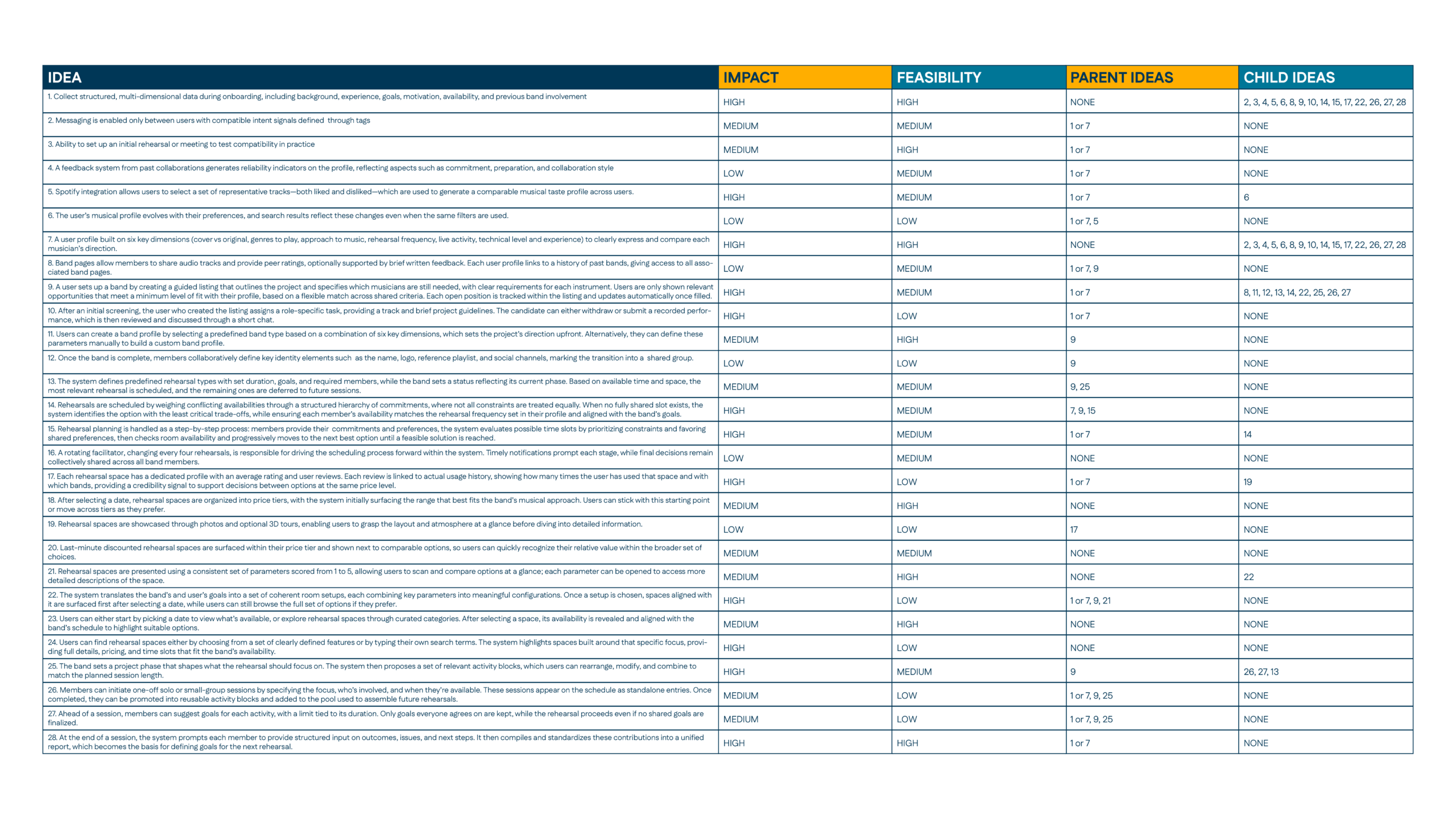
The ideas were organized in a table and evaluated using three criteria: impact on real collaboration, feasibility within a single product experience, and dependency between ideas.
This made it possible to identify which concepts were foundational and which depended on others to work effectively.
The process also helped reduce overlap between ideas and separate two main areas of the experience: forming a band and planning rehearsals
View Impact Feasibility Matrix
View Impact Feasibility Matrix
Forming a Band
- Collect structured, multi-dimensional data during onboarding, including background, experience, goals, motivation, availability, and previous band involvement
- Spotify integration allows users to select a set of representative tracks—both liked and disliked—which are used to generate a comparable musical taste profile across users.
Read More
- A user sets up a band by creating a guided listing that outlines the project and specifies which musicians are still needed, with clear requirements for each instrument. Users are only shown relevant opportunities that meet a minimum level of fit with their profile, based on a flexible match across shared criteria. Each open position is tracked within the listing and updates automatically once filled.
- Users can create a band profile by selecting a predefined band type based on a combination of six key dimensions, which sets the project’s direction upfront. Alternatively, they can define these parameters manually to build a custom band profile.
- Ability to set up an initial rehearsal or meeting to test compatibility in practice.
Planning Rehearsals
- Rehearsal planning is handled as a step-by-step process: members provide their commitments and preferences, the system evaluates possible time slots by prioritizing constraints and favoring shared preferences, then checks room availability and progressively moves to the next best option until a feasible solution is reached.
- Rehearsals are scheduled by weighing conflicting availabilities through a structured hierarchy of commitments, where not all constraints are treated equally. When no fully shared slot exists, the system identifies the option with the least critical trade-offs, while ensuring each member’s availability matches the rehearsal frequency set in their profile and aligned with the band’s goals.
Read More
- After selecting a date, rehearsal spaces are organized into price tiers, with the system initially surfacing the range that best fits the band’s musical approach. Users can stick with this starting point or move across tiers as they prefer.
- Each rehearsal space has a dedicated profile with an average rating and user reviews. Each review is linked to actual usage history, showing how many times the user has used that space and with which bands, providing a credibility signal to support decisions between options at the same price level.
- Rehearsal spaces are presented using a consistent set of parameters scored from 1 to 5, allowing users to scan and compare options at a glance; each parameter can be opened to access more detailed descriptions of the space.
- The band sets a project phase that shapes what the rehearsal should focus on. The system then proposes a set of relevant activity blocks, which users can rearrange, modify, and combine to match the planned session length.
- The system defines predefined rehearsal types with set duration, goals, and required members, while the band sets a status reflecting its current phase. Based on available time and space, the most relevant rehearsal is scheduled, and the remaining ones are deferred to future sessions.
5. SYSTEM DEFINITION
5.1 Sitemap
After selecting the core solutions, the next step was to organize them into a structure that supports the full product experience.
The sitemap translates these decisions into a connected system, ensuring that key issues such as fragmented coordination and lack of early alignment are addressed through a unified flow.
The system is structured as a progression from individual setup to collaborative band management. Users start by defining their profile, making key signals such as musical direction, goals and availability explicit from the beginning.
These inputs directly shape band creation and Candidate Matching, where compatibility is evaluated before forming a Band Project.
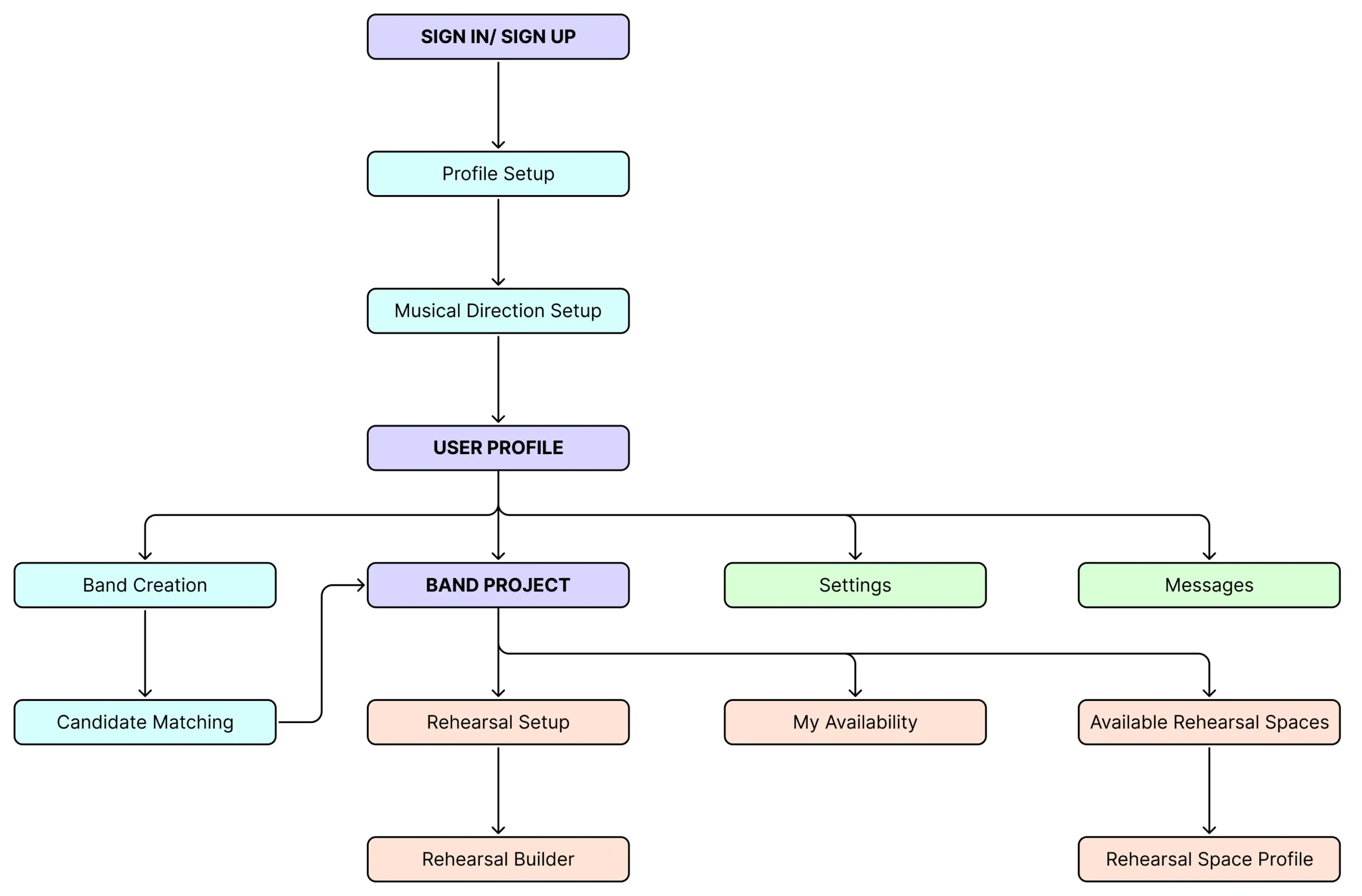
View Sitemap
View Sitemap
Read More
The Band Project acts as the central workspace, connecting all collaborative activities.
From here, users move into rehearsal planning through Rehearsal Setup and the Rehearsal Builder, supported by My Availability for scheduling and Available Rehearsal Spaces for logistical decisions. These elements are intentionally grouped to manage coordination as a single process rather than through separate tools.
Additional sections such as Settings and Messages support configuration and communication without interrupting the main flows.
Overall, the structure reflects a deliberate choice to organize the system around key moments of collaboration, enabling earlier alignment and reducing fragmentation across related activities.
5.2 User flows
The user flows define how the system structures two critical moments: forming a band and coordinating rehearsals. Rather than describing isolated features, they show how key decisions are guided and validated to address the main issues identified in the research.
Band creation
Read More
In the band formation flow, compatibility is not treated as a static profile attribute but as a process. Users define their musical direction during profile setup, which directly informs band creation and role-based candidate matching. Instead of confirming members upfront, the flow introduces a testing phase where a rehearsal is scheduled and candidates are evaluated in practice before finalizing the lineup. This decision shifts compatibility assessment earlier and makes it observable, reducing the risk of misalignment that typically emerges after a band is already formed

Rehearsal planning
Read More
In the rehearsal planning flow, coordination is handled as a single structured process. Session definition starts by selecting a rehearsal type and generating activity blocks, which can be adapted before confirmation. Availability is then managed through constraints and priorities, allowing the system to determine a viable time slot. Space selection follows within the same flow, filtering options and leading to a scheduled session. This sequence reflects a deliberate choice to connect session planning, availability, and logistics, ensuring that key decisions are aligned before the rehearsal takes place.

Band creation
Read More
In the band formation flow, compatibility is not treated as a static profile attribute but as a process. Users define their musical direction during profile setup, which directly informs band creation and role-based candidate matching. Instead of confirming members upfront, the flow introduces a testing phase where a rehearsal is scheduled and candidates are evaluated in practice before finalizing the lineup. This decision shifts compatibility assessment earlier and makes it observable, reducing the risk of misalignment that typically emerges after a band is already formed
Rehearsal planning
Read More
In the rehearsal planning flow, coordination is handled as a single structured process. Session definition starts by selecting a rehearsal type and generating activity blocks, which can be adapted before confirmation. Availability is then managed through constraints and priorities, allowing the system to determine a viable time slot. Space selection follows within the same flow, filtering options and leading to a scheduled session. This sequence reflects a deliberate choice to connect session planning, availability, and logistics, ensuring that key decisions are aligned before the rehearsal takes place.
6. WIREFRAMES
Wireframes were used to define the structural logic of the system before introducing any visual layer, focusing on how information is organized and how key decisions are supported across the four core areas of the product.
Band Creation
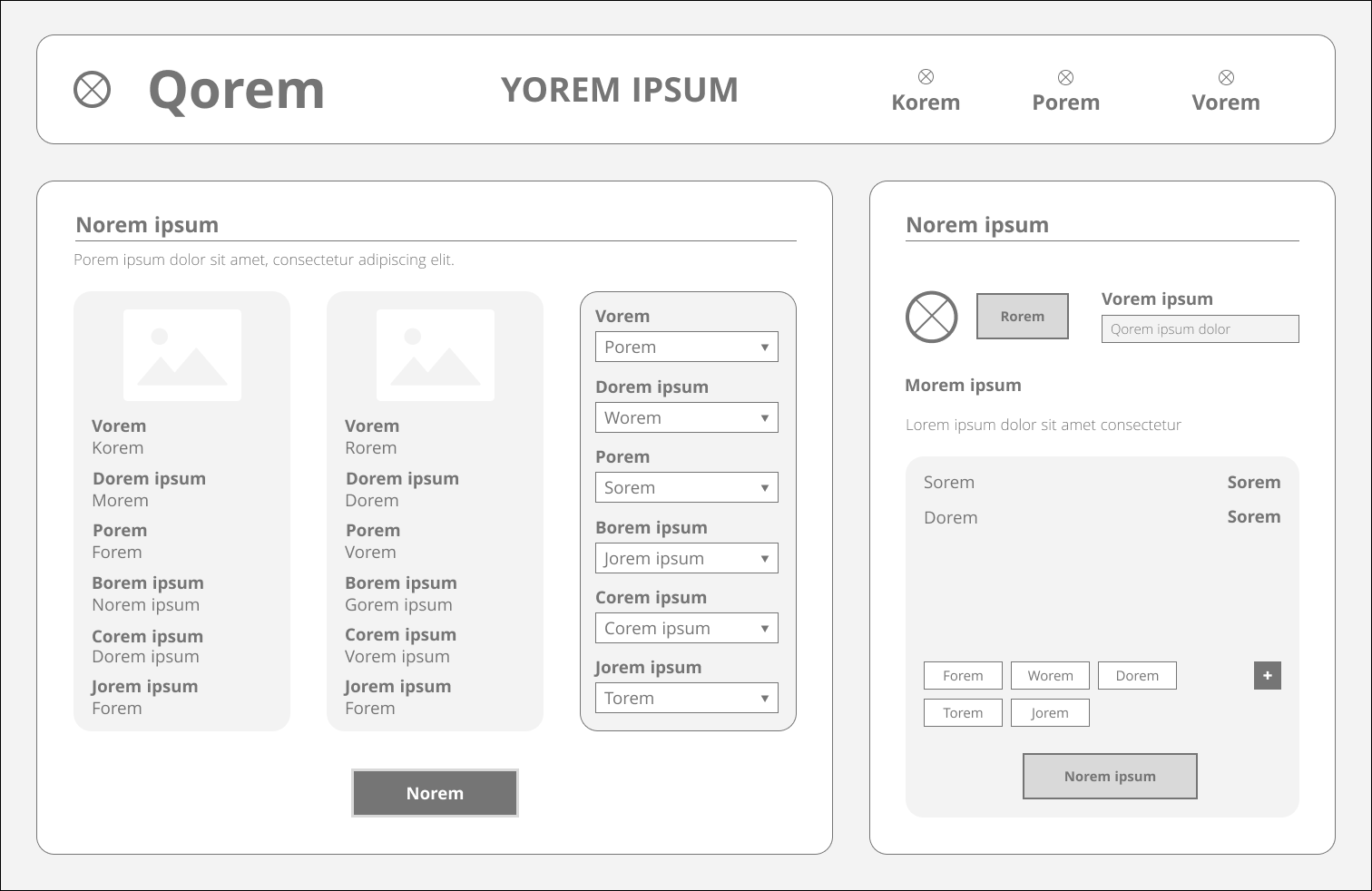
The Band Creation wireframe defines how a band is formed starting from musical direction and configuration. It structures the process around explicit choices on genre, style, experience level, rehearsal frequency, and live activity, followed by instrument assignment. This ensures that the foundation of the band is clearly defined before moving into selection or matching phases.
Matching
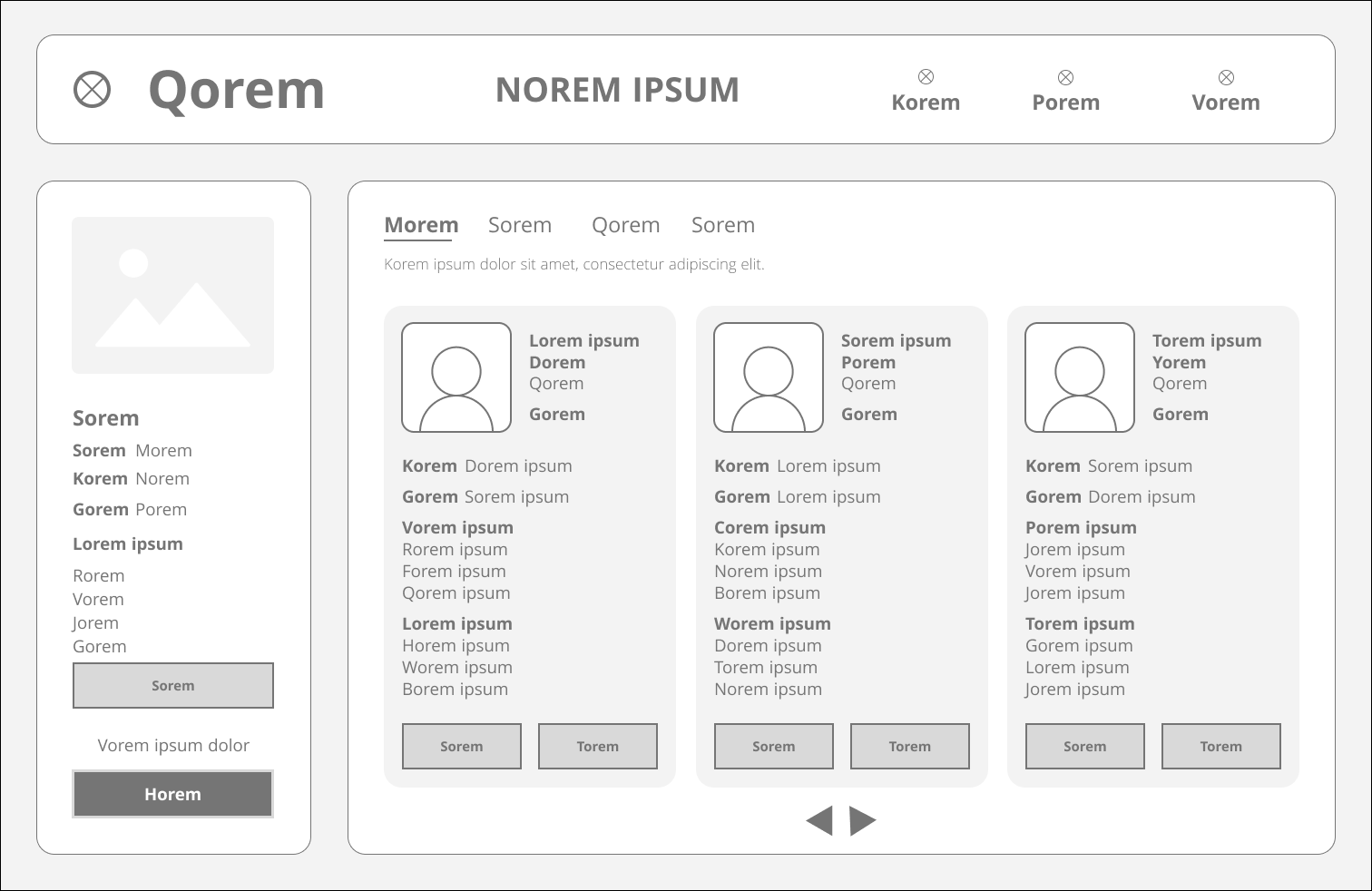
The Matching Candidates wireframe structures selection as a role-based comparison system.
Each instrument slot is associated with a set of candidates, enabling evaluation within a defined context rather than across an unstructured list. This supports more controlled and comparable decision-making for each band position.
Band Creation
The Band Creation wireframe defines how a band is formed starting from musical direction and configuration. It structures the process around explicit choices on genre, style, experience level, rehearsal frequency, and live activity, followed by instrument assignment. This ensures that the foundation of the band is clearly defined before moving into selection or matching phases.
The Band Creation wireframe defines how a band is formed starting from musical direction and configuration. It structures the process around explicit choices on genre, style, experience level, rehearsal frequency, and live activity, followed by instrument assignment. This ensures that the foundation of the band is clearly defined before moving into selection or matching phases.
Matching
The Matching Candidates wireframe structures selection as a role-based comparison system.
Each instrument slot is associated with a set of candidates, enabling evaluation within a defined context rather than across an unstructured list. This supports more controlled and comparable decision-making for each band position.
Matching
The Matching Candidates wireframe structures selection as a role-based comparison system.
Each instrument slot is associated with a set of candidates, enabling evaluation within a defined context rather than across an unstructured list. This supports more controlled and comparable decision-making for each band position.
Availability
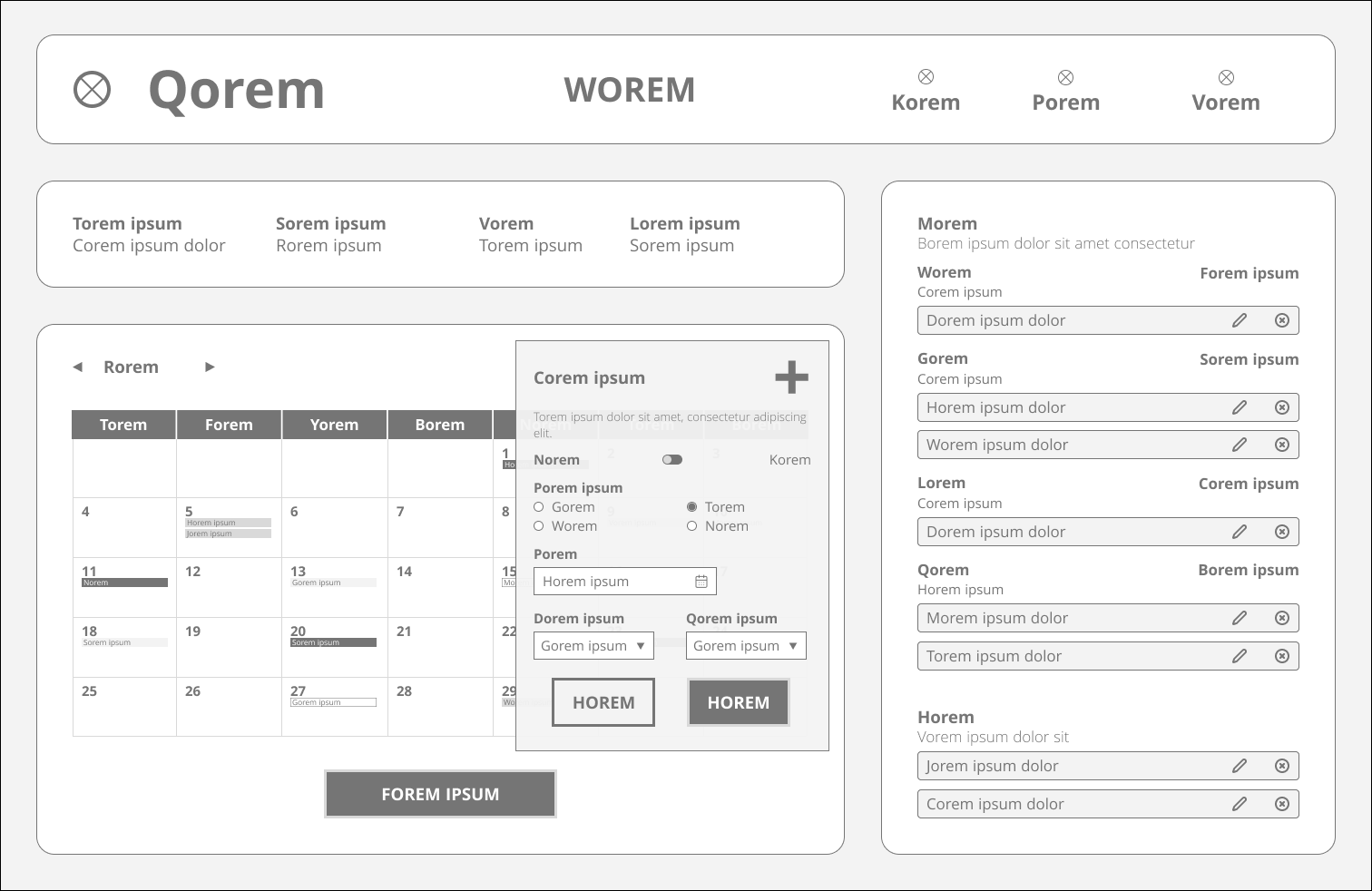
The My Availability wireframe defines scheduling through a constraint-based system. Users express availability as categorized time entries with priorities and constraints, allowing the system to resolve overlaps and align multiple members without relying on external coordination tools.
Rehearsal Builder
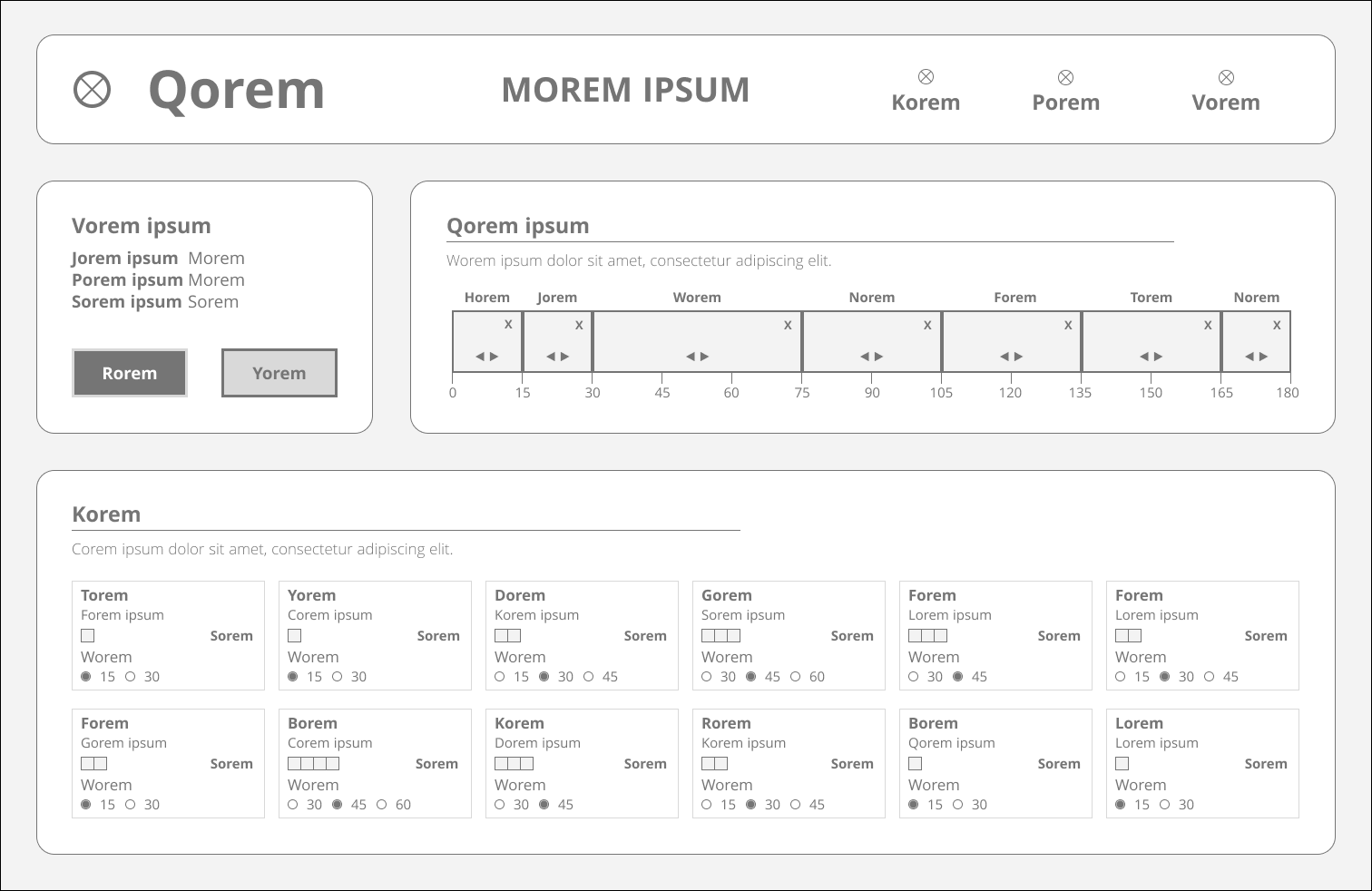
The Rehearsal Builder wireframe structures rehearsal planning as a composition of modular activity blocks within a fixed timeline.
Users construct sessions by selecting, inserting, and adjusting blocks until the full duration is properly allocated. Across all wireframes, the structure is designed to reduce ambiguity in collaboration by turning informal decisions into explicit, step-based interactions.
Availability
The My Availability wireframe defines scheduling through a constraint-based system. Users express availability as categorized time entries with priorities and constraints, allowing the system to resolve overlaps and align multiple members without relying on external coordination tools.
Rehearsal Builder
The Rehearsal Builder wireframe structures rehearsal planning as a composition of modular activity blocks within a fixed timeline.
Users construct sessions by selecting, inserting, and adjusting blocks until the full duration is properly allocated. Across all wireframes, the structure is designed to reduce ambiguity in collaboration by turning informal decisions into explicit, step-based interactions.
Availability
The My Availability wireframe defines scheduling through a constraint-based system. Users express availability as categorized time entries with priorities and constraints, allowing the system to resolve overlaps and align multiple members without relying on external coordination tools.
Rehearsal Builder
The Rehearsal Builder wireframe structures rehearsal planning as a composition of modular activity blocks within a fixed timeline.
Users construct sessions by selecting, inserting, and adjusting blocks until the full duration is properly allocated. Across all wireframes, the structure is designed to reduce ambiguity in collaboration by turning informal decisions into explicit, step-based interactions.
7. VISUAL DESIGN
7.1 UI System
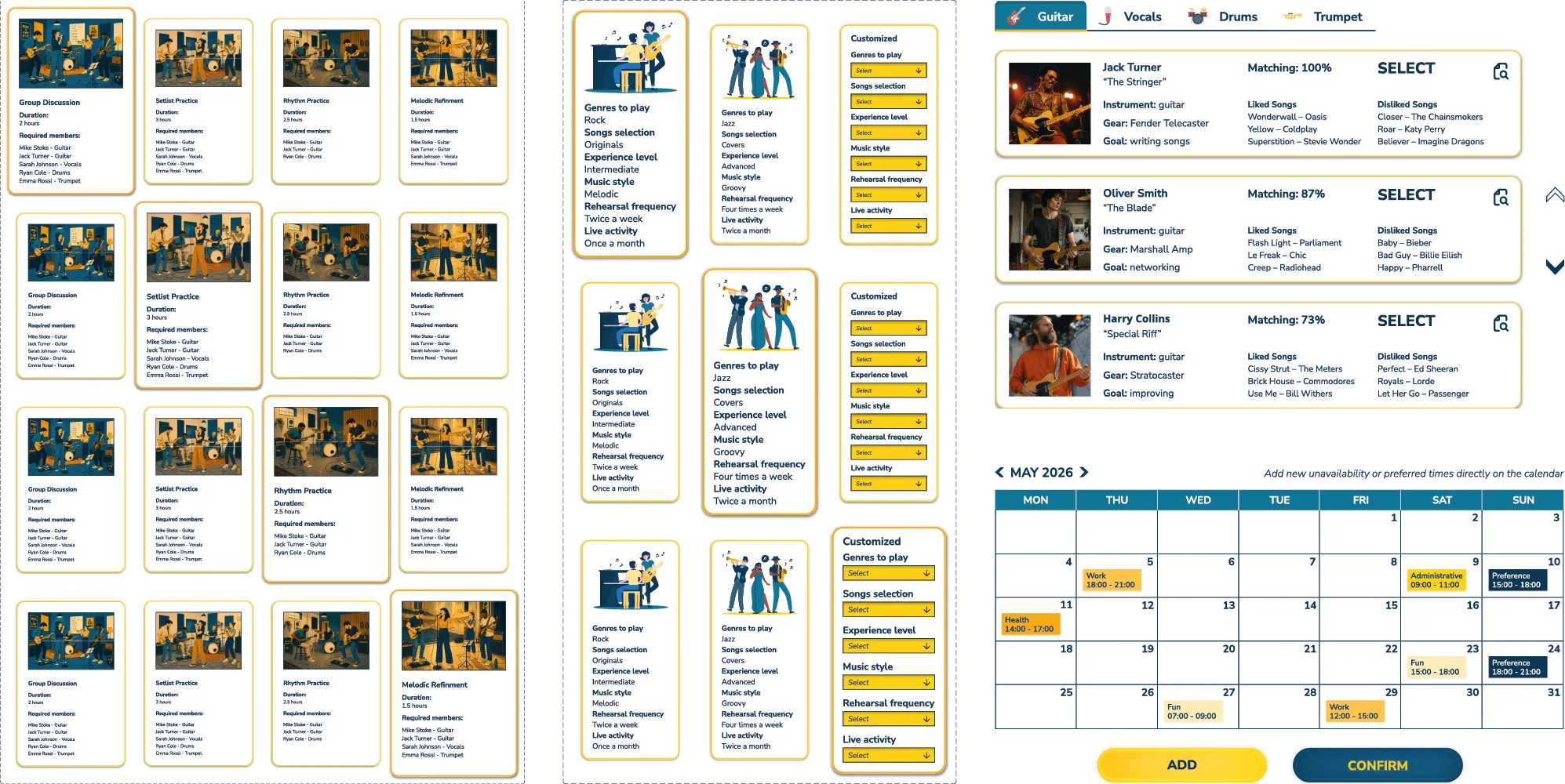
The visual system translates the UX structure into a decision-oriented interface where hierarchy and interaction states reduce ambiguity in collaboration.
Each interface layer corresponds to a specific decision level defined in the system: individual setup, compatibility evaluation, and collective coordination. This ensures that visual structure directly reflects how decisions evolve across the product.
Consistency is achieved through reusable UI patterns.
Read More
Card-based structures enable comparison between musicians, bands, and rehearsal spaces by standardizing how information is grouped. Step-based flows reduce complexity during band creation by progressively revealing information.
Calendar and timeline components structure availability into explicit constraints rather than informal coordination.
Interaction states define system meaning rather than only feedback. Selection indicates intent, compatibility indicates alignment, and confirmation locks shared decisions. This transforms the interface into an active decision system rather than a passive UI.
7.2 Visual Identity
The naming “Sound Mates” reflects a system designed around structured collaboration rather than informal discovery. “Sound” defines the domain, while “Mates” defines the relational system between users.
The visual language is derived directly from research findings. Compatibility uncertainty leads to standardized and comparable information structures. Fragmented coordination leads to hierarchical organization of interface elements. The difficulty in comparing alternatives leads to a unified visual model based on reusable components.
The logo reinforces this structure by prioritizing recognition and system association over stylistic expression.

8. PROTOTYPE
The prototype translate the system structure into a functional interface where each screen represents a decision environment within the collaboration process.
Each prototype corresponds to a distinct stage of the system rather than an isolated feature. Band creation defines structured setup of musical direction and roles. Matching enables comparative evaluation of candidates within a shared context. Availability transforms scheduling into constraint resolution. The rehearsal builder translates planning into modular composition of activities.
Together, the prototypes form a continuous system where decisions are progressively refined rather than handled in isolation.
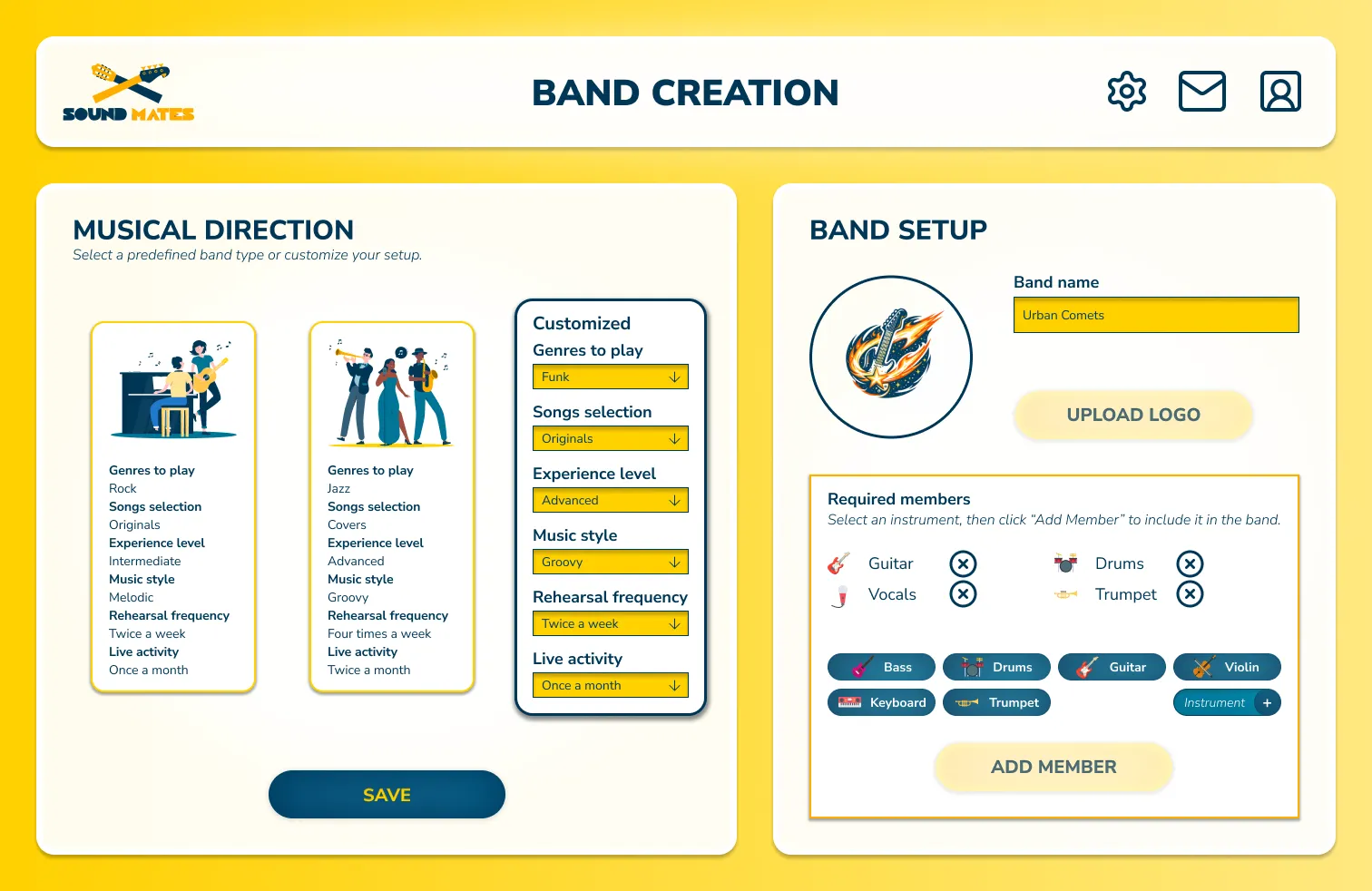
Band Creation
Defines band setup and role assignment.
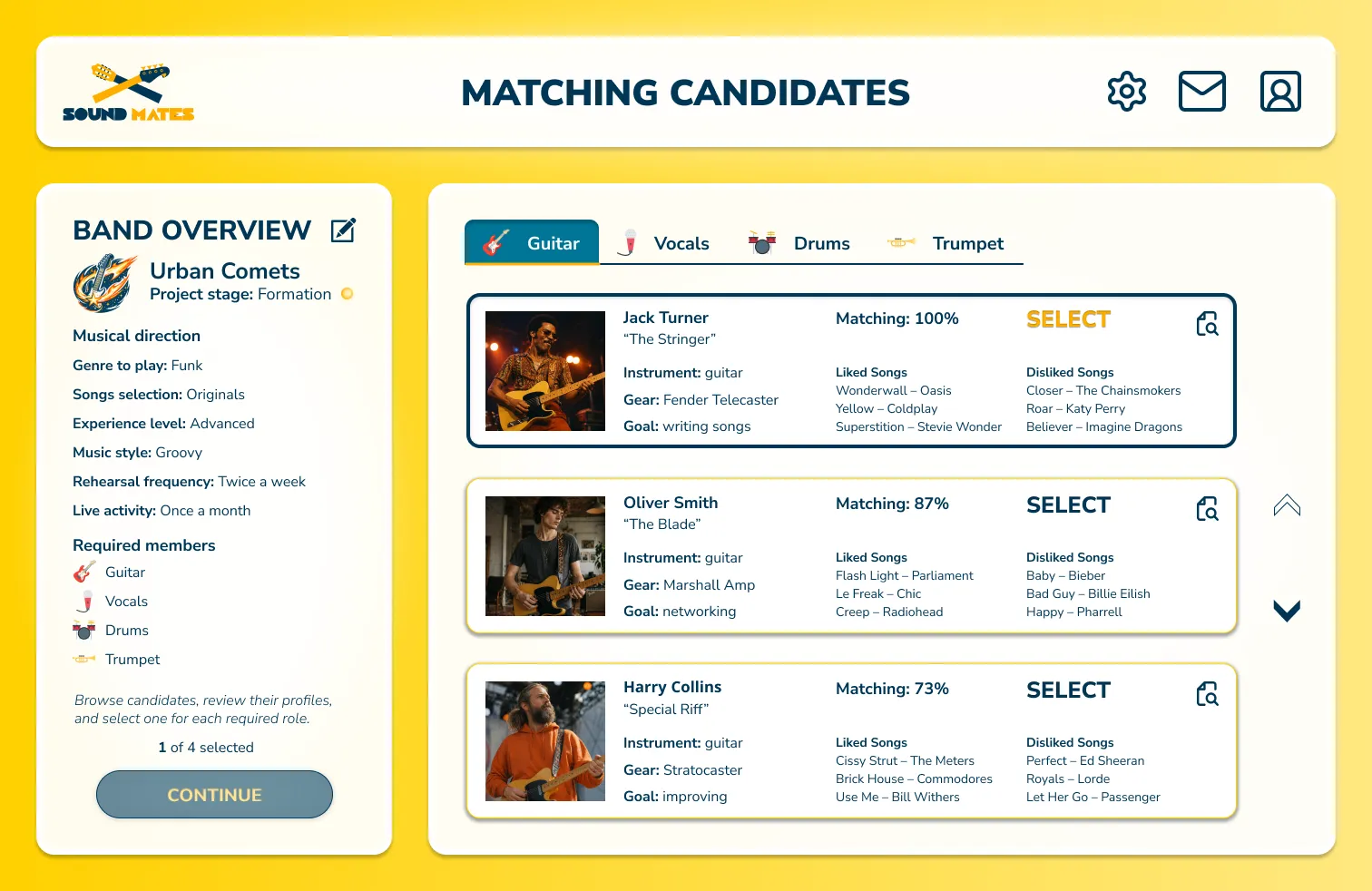
Matching
Enables structured comparison of candidates per role.
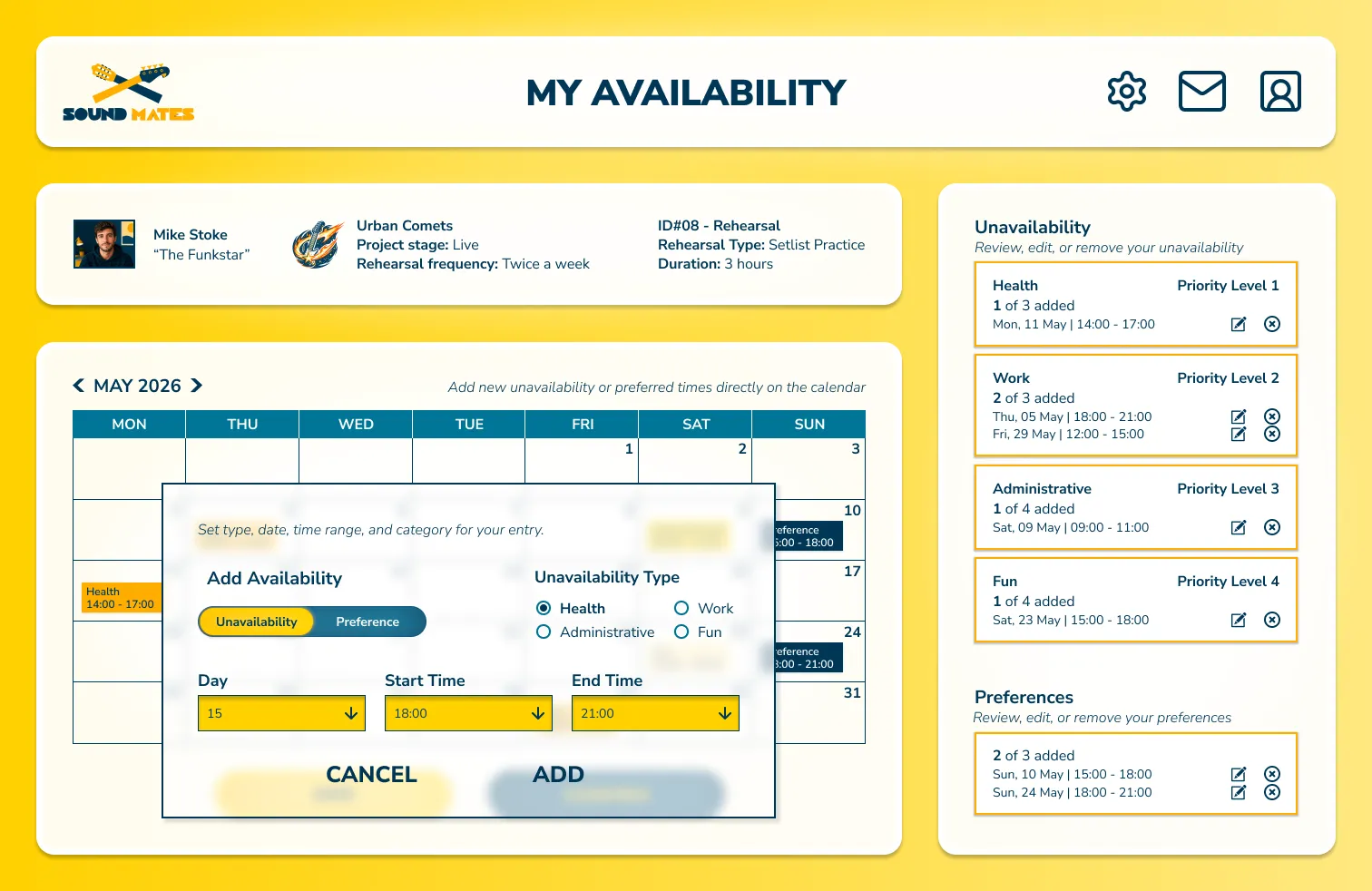
Availability
Manages scheduling through
constraint-based availability.
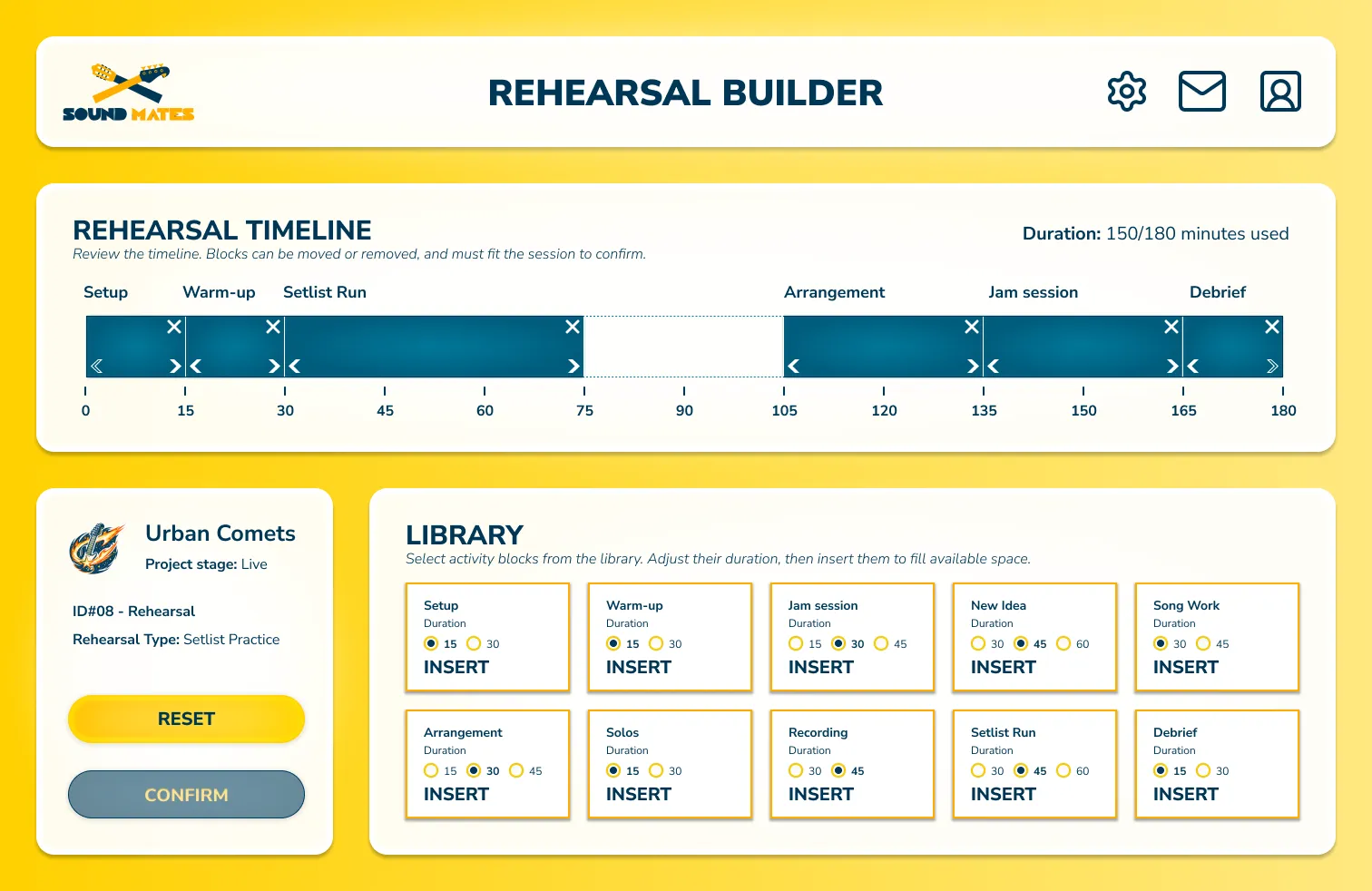
Rehearsal Builder
Builds rehearsal sessions through modular activity blocks.
Band Creation
Defines band setup and role assignment.
Matching
Enables structured comparison of candidates per role.
Availability
Manages scheduling through
constraint-based availability.
Rehearsal Builder
Builds rehearsal sessions through modular activity blocks.
9. TESTING
9.1 Test Setup
The high-fidelity prototype was validated through 5 remote moderated sessions with musicians aligned with the target audience. Participants joined the sessions on Google Meet, shared their screen, and interacted with the desktop prototype while thinking aloud.
The test focused on two connected areas of the experience.
Read More
The first was band formation, from profile setup and musical direction to band project creation, candidate review, test rehearsal planning, and final lineup confirmation. The second was rehearsal coordination, covering rehearsal setup, timeline building, availability input, rehearsal space review, and the final scheduling proposal.
The evaluation focused on how clearly participants understood the system’s decision points, how they interpreted status changes, where the interface required additional explanation, and whether each flow provided enough feedback to support confident decisions.
9.2 What Worked
The overall system logic was understood. Participants recognized Sound Mates as a platform that connects compatibility, band formation, and rehearsal coordination within the same product experience.
Read More
Profile setup, personal musical direction, and the first steps of member selection were generally accessible. Participants understood why musical direction, roles, and project information were relevant before forming a band.
The rehearsal planning flow also worked at a conceptual level. Rehearsal setup, timeline
structure, member availability, and space options were understood as related parts of a coordinated planning process.
The main friction points emerged where the interface needed to make states, labels, and system logic more explicit.
9.3 Key Findings
The test highlighted five areas where the experience needed stronger contextual clarity, clearer feedback, and more transparent system behaviour.
Read More
Section context was not always explicit enough
Some areas included the right information, but the interface did not always make the purpose of the section immediately clear. This affected labels, helper texts, hierarchy, and naming across profile information, band sections, musical direction, project status, and rehearsal identifiers
Candidate selection needed stronger status feedback
The matching flow supported candidate comparison, but the selection state needed to be more visible while users moved across roles and profiles. The interface had to communicate more clearly which candidate was being reviewed, which member had been selected, which profiles were not selected, and where comparison details could be accessed.
Rehearsal Builder states needed more contextual guidance
The block-based timeline was understood, but users needed clearer guidance as the timeline changed state. A full timeline, an empty slot, incompatible block durations, and restricted movement controls each required more explicit feedback to clarify what could be done next.
Availability needed clearer visibility without reducing privacy
The availability flow needed to make personal input and member status easier to read. Users needed clearer cues around their own calendar, free days, saved commitments, and whether other members had submitted availability, without exposing the details of each member’s private schedule.
The final scheduling proposal needed stronger system transparency
The space review and final confirmation steps needed to make the system’s logic more visible. Users needed to understand that space options were connected to possible rehearsal dates, and that the final proposal was generated by combining member commitments, preferences, and the availability of the selected rehearsal space.
9.4 Design Iterations
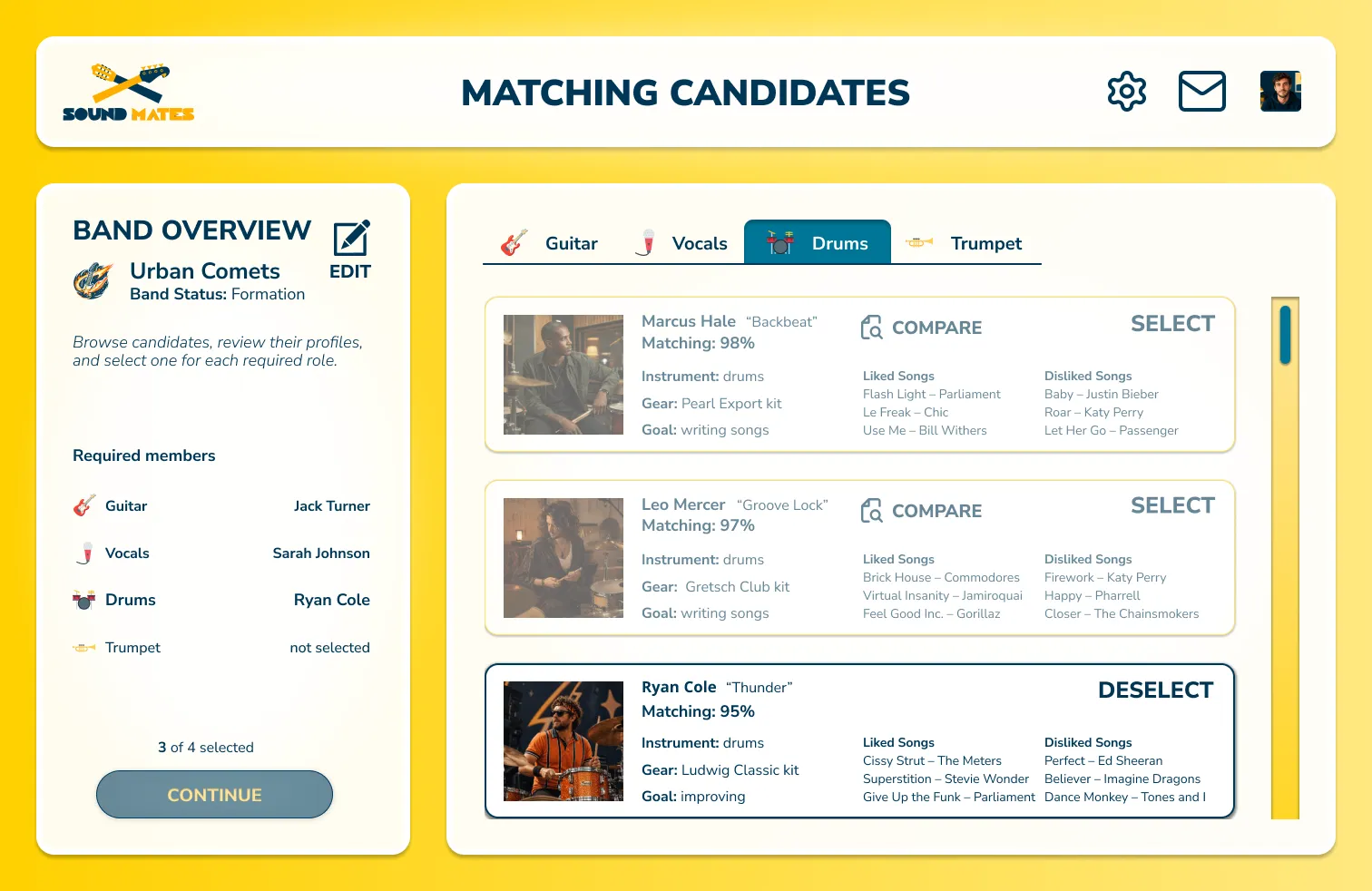
Matching Candidates
Clarifying selection status and candidate comparison.
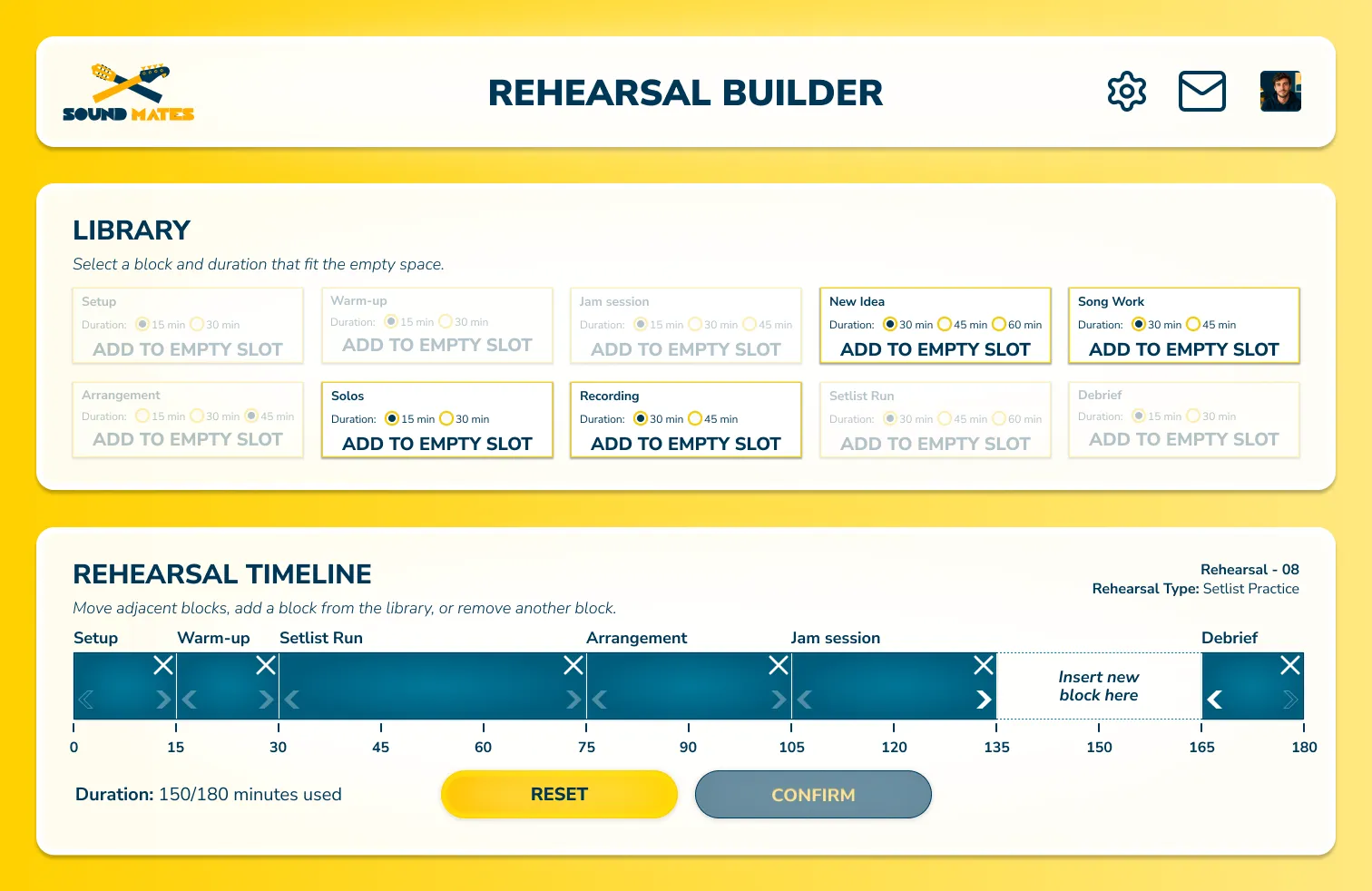
Rehearsal Builder
Guiding timeline changes through clearer interaction states.
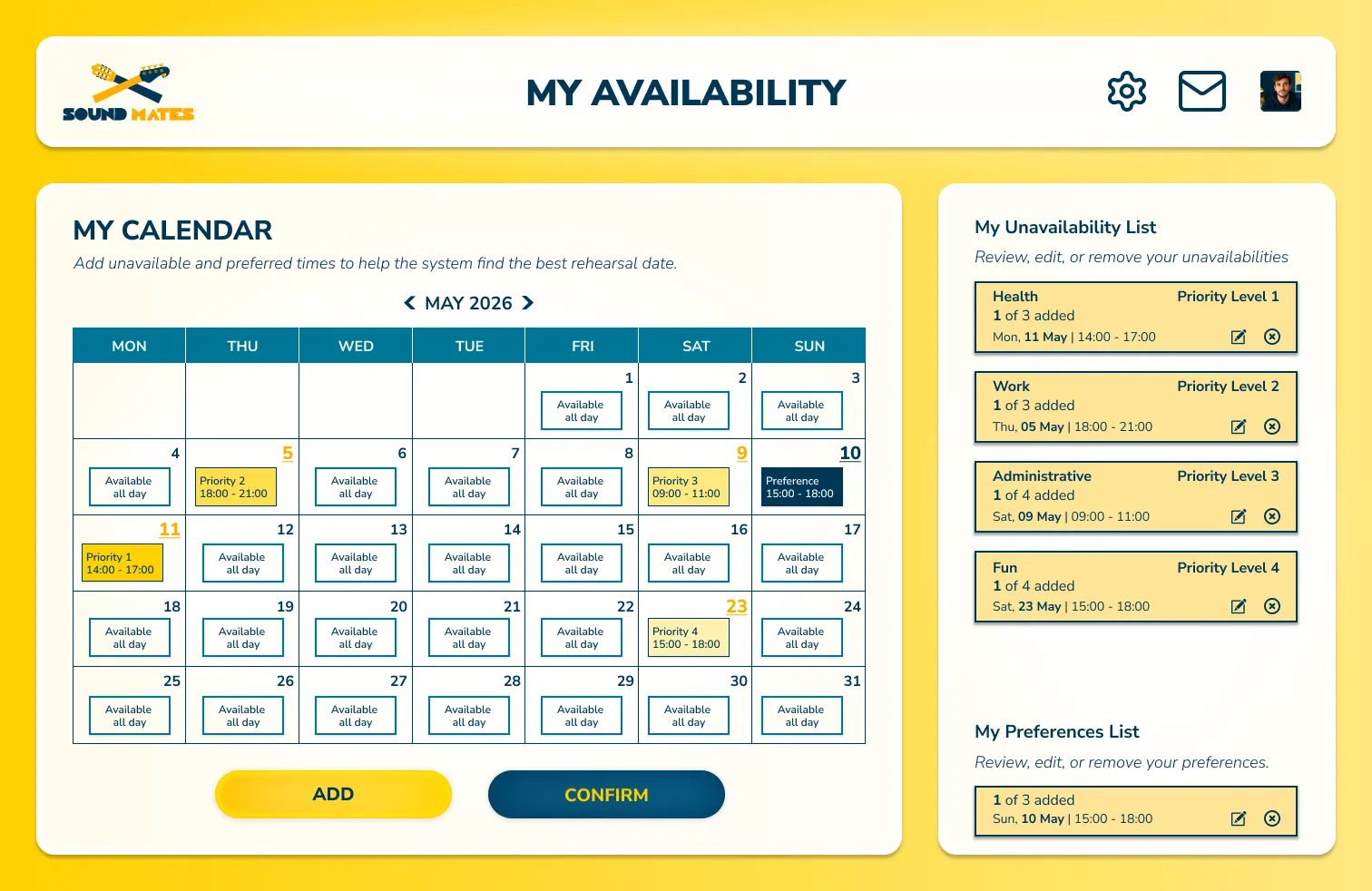
My Availability
Clarifying personal availability input and calendar states.
Matching Candidates
Clarifying selection status and candidate comparison.
Rehearsal Builder
Guiding timeline changes through clearer interaction states.
My Availability
Clarifying personal availability input and calendar states.
10. CONCLUSION
10.1 Result
Sound Mates defines a structured collaboration system for amateur musicians, connecting the moment before a band is formed with the coordination work that begins after the lineup is created.
The final prototype covers the core experience: individual setup, musical direction, band creation, candidate matching, test rehearsal, lineup confirmation, rehearsal setup, timeline building, availability input, rehearsal space review, and the final scheduling proposal.
Read More
Usability testing helped refine the points where the system needed stronger clarity: candidate selection feedback, contextual timeline guidance, availability visibility, space review, and the way the system explains its final scheduling decision.
The result is a product experience that moves beyond simple band management. Instead of only organizing activities after a band already exists, Sound Mates supports earlier alignment, clearer collaboration decisions, and more coordinated rehearsal planning as the band develops
10.2 Future Impact
Future iterations could extend Sound Mates beyond the core formation and rehearsal-planning flows, developing additional ideas from the research and ideation phase.
Read More
The first opportunity is a responsibility layer for band collaboration. Roles could expand beyond instruments to include non-musical tasks such as promotion, rehearsal preparation, equipment, communication, and live-show organization, making expectations clearer as the band becomes more active.
The second opportunity is a creative development layer. Rehearsals could include notes, recordings, song ideas, setlist progress, and follow-up actions, helping bands preserve what happens during sessions instead of losing ideas across chats or personal files.
The third opportunity is a live activity and promotion layer. The platform could support gig preparation, venue opportunities, event details, promotional materials, and show history, extending the system from forming and rehearsing a band to helping it become more visible and active over time.